
Beyond the AI: Lucas Blalock and the Dissolution of Photography
Lucas Blalock discusses photography and its shift from medium to material. Explore his insights on AI and the evolving future of images.
A couple of years ago, New York. In the sparse, transitional space of Lucas Blalock’s Brooklyn studio—boxes stacked along the hallway, evidence of a decade’s worth of creative accumulation preparing for departure—the artist sits in the middle of what he describes as a fundamental questioning. Twenty-five boxes of materials, objects, and fragments of past work await their fate. It’s a physical manifestation of the conceptual transition Blalock is undergoing, one that mirrors a larger shift in contemporary art: the dissolution of photography as a discrete medium and its transformation into something altogether different.
“I don’t really think about myself as a photographer anymore,” Blalock states plainly, a declaration that would have been unthinkable earlier in his career. For an artist whose work has been so deeply embedded in photographic discourse, whose manipulated images have challenged and expanded what photography could be, this isn’t simply a categorical shift. It represents a fundamental reassessment of how images function, circulate, and mean in contemporary culture.
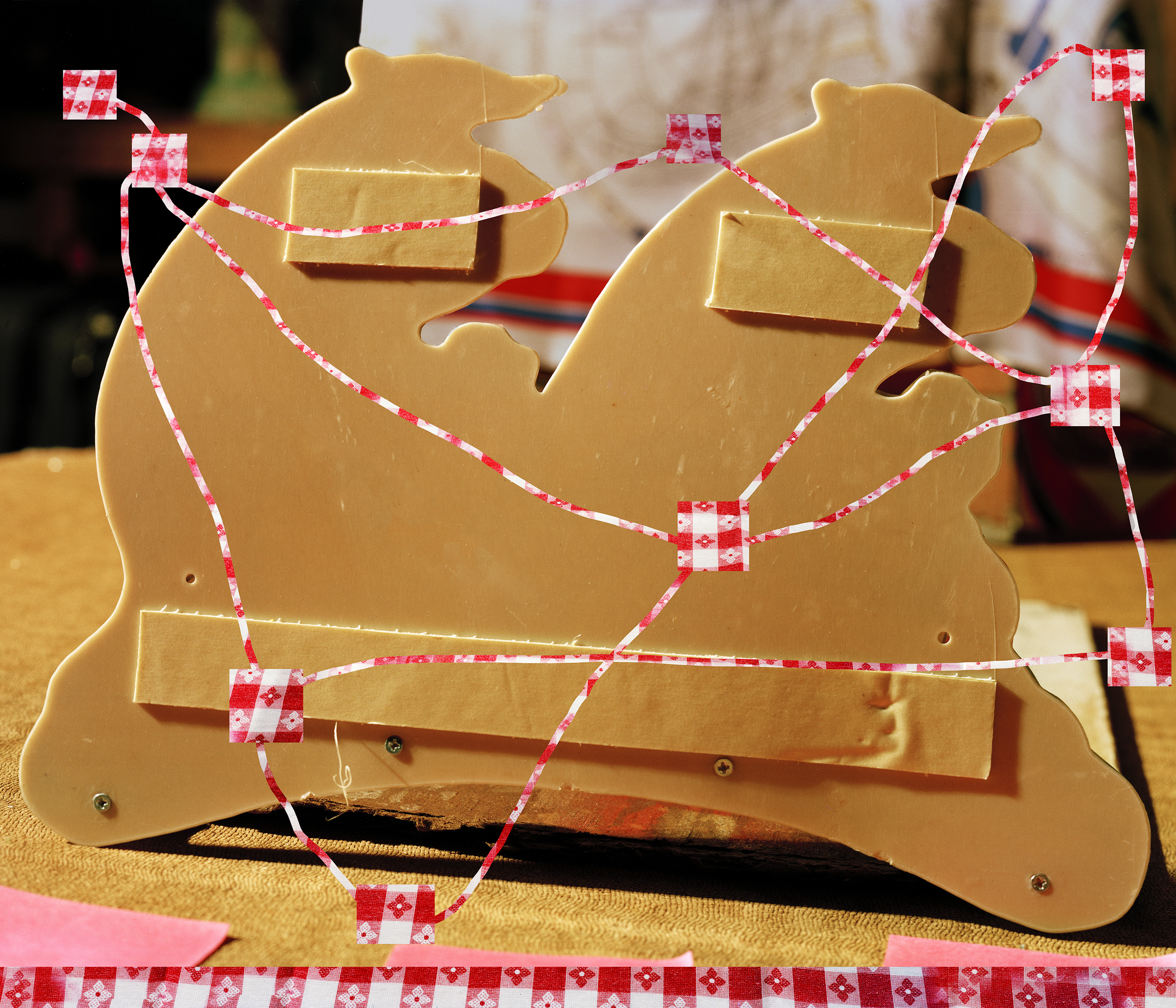
The Evolution of an Identity.
The question of artistic identity—artist or photographer—seems almost quaint now, but it was once central to how Blalock understood his practice. In the late 2000s and early 2010s, when he emerged as a distinctive voice, the tension was productive. His work existed in a fascinating liminal space: photographs that didn’t look like photographs, images constructed with photographic tools but yielding results that prompted viewers to question their categorical assumptions. “Early on, people were like, oh, well that’s collage,” Blalock recalls. His response was to assert his identity as a photographer: “I was making a photograph with the same tools and the same procedures that I would make a photograph that looked like a photograph.” His workflow was a photographer’s workflow, even if the outcomes challenged conventional expectations. This tension between process and product, between medium-specific craft and conceptual elasticity, was where his work found its energy. But Blalock’s relationship to the photographic identity wasn’t merely defensive. It was strategic. “I liked the idea of being a photographer a lot, and I thought it was important to the work,” he explains. The friction generated by making unconventional images within the framework of photography—pushing against boundaries while still claiming membership in the tradition—produced something vital. Photography, in that moment, felt like a container robust enough to hold experimental thinking while still offering resistance.
The Porosity Problem.
What changed? In Blalock’s assessment, photography itself transformed. The medium became what he calls “porous,” so “accepting of things” and “malleable” that it lost its capacity to generate productive friction. When everything can be photography, when the boundaries are infinitely flexible, the strategic value of working within those constraints diminishes. “It’s so heterogeneous now,” Blalock observes. “Where does it stop? If you use AI in your photograph, is it a photograph? If it’s entirely computationally generated, does it quit being a photograph?” These aren’t rhetorical questions—they point to a genuine crisis of definition. Photography has become so inclusive, so capacious, that it threatens to become meaningless as a category. This porosity reflects broader technological and cultural shifts. When Blalock began his career, photography was transitioning from paper to screen, experiencing what he describes as “a kind of crisis about its material self.” Artists responded by making camera-less pictures, exploring paper as material, interrogating process. There was “a sense that photography was really a medium, that there were all these different moves and all this thinking that could be had in photography.” That moment has passed. Photography is no longer having a crisis about itself because it’s ceased to function as a coherent “art medium” in the traditional sense. The transition Blalock identifies isn’t just technological—from analog to digital, from paper to screen—but ontological. Photography has become something other than what it was. “I is someone else.”

From Medium to Material.
In attempting to articulate this shift, Blalock reaches for new language. “I feel like photography is more a material than it is a medium.” “It’s a way to bring things into the room. It’s a means of transportation.” This reframing is crucial. Photography becomes not a container for artistic thinking but a vehicle, a method of conveyance rather than a destination. In elaborating this Blalock distinguishes between different senses of “medium.” Photography in this construction is not an art medium like painting or sculpture, not even a medium in Marshall McLuhan’s sense of how the form shapes the message, but rather “a medium as a means of getting something somewhere.” Photography is infrastructural rather than categorical.
The Role of the Photographer.
If photography isn’t a medium, does the photographer remain a role? The photographer persists as a cultural figure even as the medium dissolves. The photographer exists as a type of authorial persona, a brand of attention and sensibility. This connects to broader patterns in how images circulate and mean. It’s not about the photograph, it’s about the account. Blalock agrees when the observation is posed. The photographer functions as a curating intelligence, an organizing consciousness that gives images value beyond their visual content. Even a photograph by Susan Sontag becomes interesting because Sontag made it—the authorship, the context, the signature, can matter as much or more than the image itself.
This sort of cult of personality represents one way photographs remain important to people. We’re curious about significance, about tracking the creative output of recognized intelligences. But this also flattens photography into a species of content creation, where the photographer is less auteur than influencer, less artist than brand.
The Analog Paradox.
In an era of infinite digital reproducibility and AI-generated imagery, Blalock observes an interesting countertrend: “the resurgence, dare I say, of interest in analog.” There’s a generation of young photographers turning to film, to darkrooms, to chemical processes— as a form of resistance or authenticity. Yet Blalock is skeptical about reading too much revolutionary potential into this return. “I don’t think it’s going to make the world go the other way,” he notes. The analog revival might preserve craft knowledge, might offer tactile satisfactions unavailable in digital workflow, but it doesn’t fundamentally challenge the screen-based circulation of images. A photograph exposed on film and developed in a darkroom still likely ends up on Instagram, converted back into the digital stream it seemed to resist.
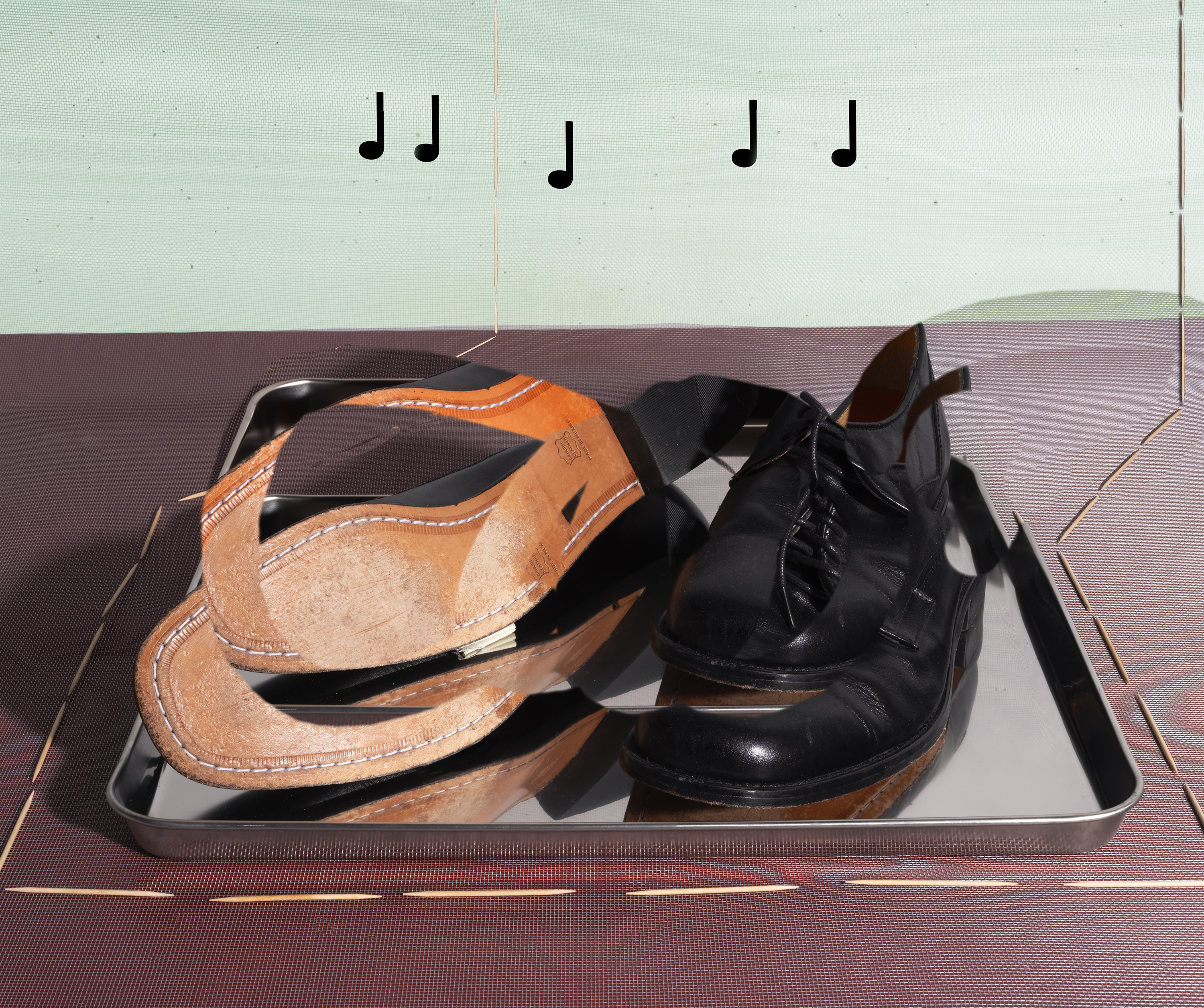
Teaching in Transition.
Blalock’s position as an educator—he teaches both the practice and theory of photography—puts him in direct contact with these generational shifts. He finds himself wondering “what’s useful to teach now” and what conversations that have been central to photo education feel out of touch. The critical frameworks that made sense when he was coming up, the debates about photography’s status and possibilities, may no longer be adequate to the current moment. He came up in “one era and we are now well into another” he reflects, a transition that affects not just his own practice but what can be meaningfully transmitted to students. There’s something poignant in this recognition—the acknowledgment that the terms of one’s emergence as an artist are always changing. It is a dynamic situation. Yet Blalock resists simply declaring photography dead or finished. “I love looking at pictures,” he insists. “I love pictures on the wall and I love pictures in books.” The affective power of images, their capacity to captivate and compel attention, hasn’t disappeared. What’s changed is the context, speed, and language.
The Instagram Question.
No conversation about contemporary photography can avoid addressing social media, and Blalock engages with the Instagram phenomenon thoughtfully. He doesn’t simply denounce the platform or romanticize pre-digital viewing conditions. Instead, he makes a subtle psychological observation: Instagram “seems to satisfy the same desires that more traditional pictorial encounters produce. I actually think that it doesn’t, but it’s so caught up in our neurobiology that it kind of short circuits the kind of attention that is there.” This is a crucial insight. The scroll doesn’t actually provide the satisfactions we seek from images—the sustained attention, the contemplative absorption, the slow revelation of content and meaning. But it triggers similar neurological responses, creating a simulacrum of visual engagement that’s satisfying enough in the moment to prevent us from seeking deeper experiences. It’s a short circuit, a hack of our visual appetites that leaves us feeling fed but not nourished.
The Photographic Print in Question.
Perhaps the most significant shift in Blalock’s thinking concerns the photographic print itself. Where he once felt that “putting this material and these moves that weren’t necessarily welcome in photography back into photography had a lot of energy,” that energy has dissipated. As “that photo space has become less defined,” he’s “not so interested in that, or more to the point it is just no longer available.” More radically, “I don’t feel so connected to the idea that a photographic print is always the best outcome for what I’m doing.” This is a remarkable position for an artist whose work has been primarily exhibited as photographic prints. It suggests that the print—long photography’s default final form, the object that gives the medium its commodity status in the art market—might be contingent rather than essential. If not prints, then what? Blalock doesn’t have a clear answer yet, which is precisely why he describes himself as being “in a very open space.” The boxes in the hallway, the cleared studio, the sense of being between things—this is more than a practical reorganization. It’s a conceptual clearing, a willingness to ask “some very basic questions again” without knowing where they’ll lead. “The truth is, I don’t yet have answers,” Blalock admits. In a culture that often demands artists have coherent narratives about their work’s meaning and direction, this uncertainty is both honest and brave.
Photography as Creative Fuel.
Throughout the conversation, Blalock returns to the concept of “creative energy”—not in a mystical sense but as a way to understand what drives artistic practice. The energy he found in the tension between photographic process and non-photographic outcomes has waned as photography became more permissive. The question becomes: how does one “get in the ring” when categorical boundaries dissolve?
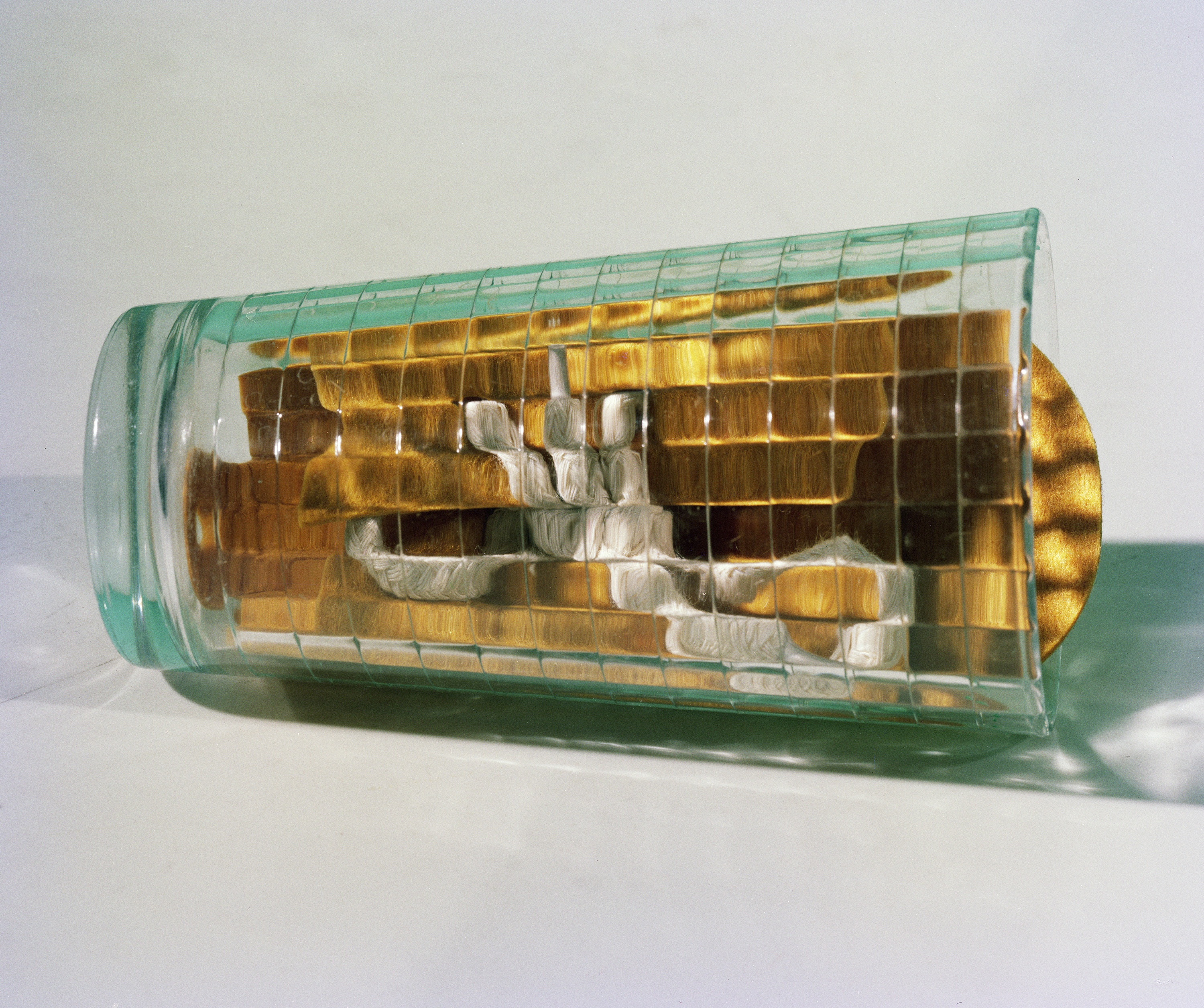
Mid-Career Reflections.
When asked if he’d describe himself as a mid-career artist, Blalock pauses before accepting the designation. “I think refusing ageing is not the best either,” he notes wryly. There’s wisdom in this acknowledgment—a recognition that artistic development, like life, moves through stages whether we embrace them or not. Being mid-career means having a body of work to look back on, a set of preoccupations and formal strategies that cohere into something recognizable. It also means the possibility of change, of not being bound to early positions or strategies. Blalock has students now, literally—he’s been teaching for years—but also conceptually, artists who’ve been influenced by his work and thinking. Yet this mid-career position is complicated by the sense that the entire field has shifted beneath him. It’s one thing to evolve as an artist within a more or less stable medium; it’s another to have the medium itself transform in ways that make your foundational assumptions obsolete. The era Blalock emerged in, that moment of photography’s digital transition and self-examination, “felt so different than this time.” He’s lived through not just a personal evolution but a historical rupture.
The Uncertain Future.
Where does Blalock’s work go from here? Where does photography go? These questions remain genuinely open. The cleared studio, the packed boxes, the sense of being in transition—these aren’t just biographical details but metaphors for a broader condition. We’re all, in some sense, in Blalock’s studio, surrounded by the artifacts of photography’s past and uncertain about its future configuration. What’s clear is that the old certainties no longer hold. Photography isn’t a medium in the way painting or sculpture are media. The photographic print isn’t the inevitable destination for photographic thinking. The photographer isn’t a fixed identity but a role that can be adopted, adapted, or abandoned. Even the images themselves—once photography’s reason for being—have become ambiguous, their status uncertain in a landscape of AI generation and infinite digital manipulation. Yet images persist. Our hunger for them, our compulsion to make and share and look at them, hasn’t diminished. If anything, we’re more image-saturated than ever, swimming in a visual stream that Flusser might recognize as the ultimate realization of the technical image. The question is how to make images that matter, that do more than add to the noise, that create spaces for genuine attention and meaning. Blalock doesn’t offer easy answers, which is part of what makes his thinking valuable. He’s working through these questions in real time, with honesty about both what he’s learned and what he doesn’t yet know. The very act of clearing out his studio, of acknowledging that old approaches may not serve future needs, models a kind of intellectual courage that feels rare.
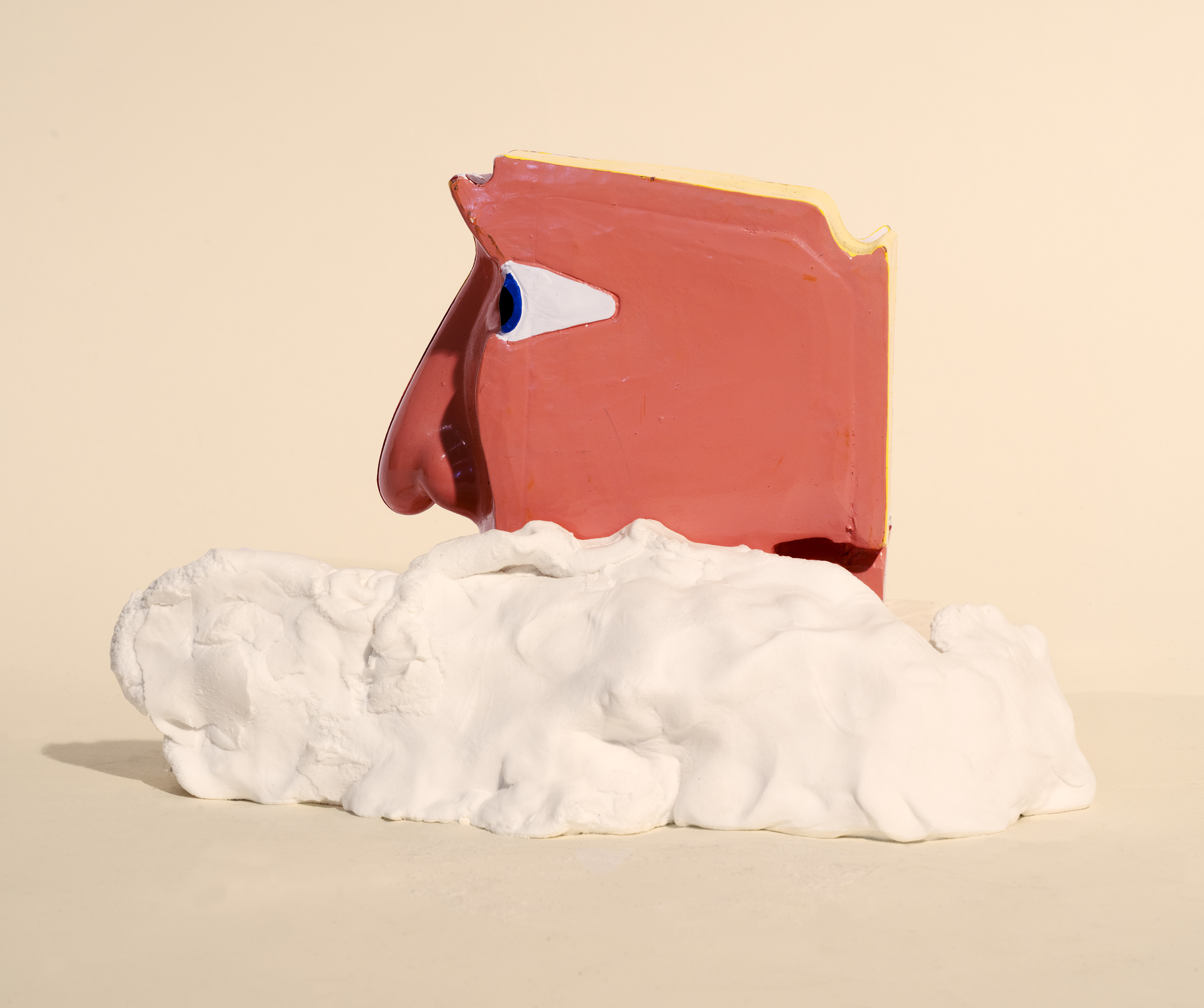
Conclusion: In the Space of Questions.
Lucas Blalock’s studio, in its current state of productive disarray, might be the most appropriate setting for a conversation about photography’s present and future. Here is an artist who helped define a moment in photographic practice—the moment when digital manipulation became not just possible but conceptually rich, when the gap between what cameras capture and what artists create became a generative space—now acknowledging that moment’s passing.
In the end, what Blalock offers isn’t a manifesto or a solution but something perhaps more valuable: a demonstration of how to think seriously about one’s practice when foundational assumptions come undone. He shows us an artist in transition, clearing space for new questions, refusing the comfort of old certainties. The boxes in the hallway will eventually be unpacked somewhere, in some configuration not yet determined. The work will continue, though what form it takes remains to be seen.
This openness to possibility, this willingness to not know, may be the most photographic thing about Blalock’s current position. Photography, after all, has always been about uncertainty—about what the camera will capture, about what will emerge in the darkroom, about how images will be read and understood. If the medium itself is now in question, perhaps the most authentic response is not to provide answers but to sit with the questions, to work through them, to see what develops.
In Lucas Blalock’s uncertain, transitional, energetically questioning practice, we see not photography’s end but its ongoing transformation into something we don’t yet have adequate language to describe. And maybe that’s exactly where photography needs to be—in the space of questions rather than answers, in motion rather than settled, alive to its own becoming.
March 16, 2026

