Das Nuell
In Jens Fröberg’s Vienna studio, time takes different forms in the work of eight artists; meeting them changes the way we look at their work.
A few days after Jens Fröberg kindly invited me to write a text for an exhibition he was organising at his studio in Vienna, I received the following email from him. The message has no greetings and reads as follow:
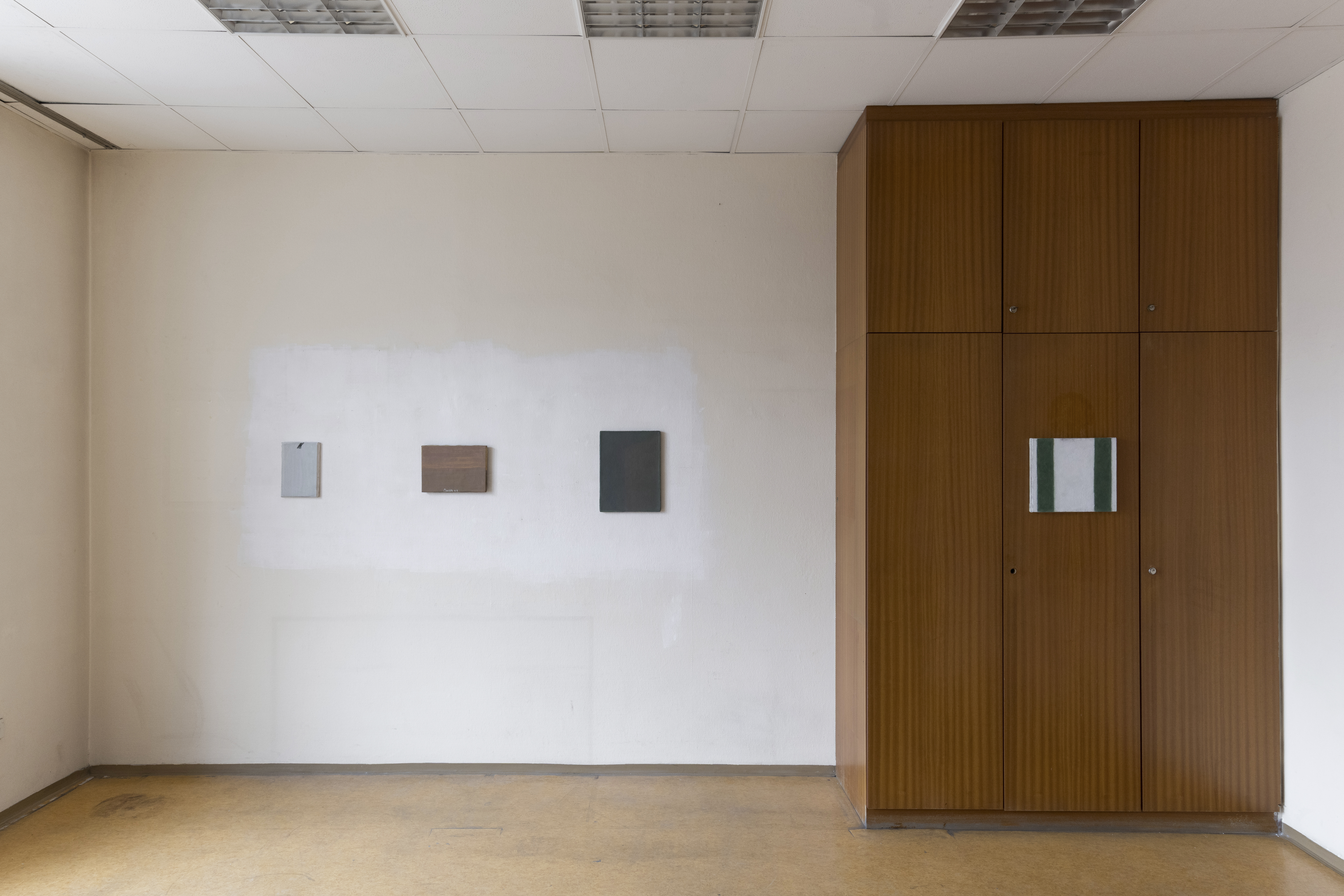
“What interested me when choosing these artists for the show was that I wanted artists who in some way relate to my own painting. I think one of the main similarities is that there is a sense of time in all the works. Eriksson, North, Rahn and I rework and have much materiality in the works (my impression is that this is true for Jose also), whereas Hofer takes an equally long time, but there is less rework. Randau is quick, but he discards much, so instead the time is not visible in the works, but it takes an equally long time to get something finished. Clausen is equally quick and maybe the one who sticks out the most in the sense of time, almost as an opposite to the others. Hofer and Clausen also contrast, as they do painting in an alternative way: Clausen by giving instructions to other painters to execute, and Hofer by embroidering what looks to be painted.
All artists share an interest in materiality. All the works are thick to various degrees; most have several layers. Randau often has fewer, but he often mixes thick and thin. His work cannot be reworked. Hofer embroiders her pictures, sometimes in layers where she stitches on top of the previous layer. What binds it even more together is that I think it all has a quietness. None of the paintings scream for attention. There is also an interest in painting history. Everyone paints except Hofer, who embroiders works that look like paintings.
There is one painting that is for sure, and it is the painting by Rahn called High Five, attached below. It’s the only fully representational painting in the show. The others will all be works that are more abstracted to various degrees but share a figurative starting motif. Several works will be monochromatic. I see a juxtaposition there between the monochrome and the landscape. It’s almost like they are both the purest form of figurative versus abstract painting. Both traditions have been going on for a long time. Both were a bold new beginning and made a revolution when first done.
A final thought is that all the works share intimacy, a meeting between the reductive and the expressive. But even the reductive can be felt by someone sensitive. It’s not minimalism. The works move between gentle and caring, and rough and caring.”
I am inclined to believe that by now you will all agree with my decision to use this text as an introduction to the exhibition before you. Try as I might, I could find no better way to convey its flavour, its premises, its perspective, its subject. I have known Fröberg since 2022, which feels both a long time ago and only yesterday. We have often talked about painting, frequently discussing the masters of the past. He loves Giorgio Morandi; I think Morandi is overrated. He is interested in time; I find time interesting only when it is wasted, although I hate wasting it.
These two details are surely of little consequence here. Beyond them, though, I would go so far as to say that you will rarely have a better conversation about painting than with a good artist. This is hardly because painting is impenetrable to anyone who does not practise it with the requisite dedication, which is to say absolute dedication. Quite the opposite. It is because, as with any other human activity, sport included, the hours spent doing and thinking about something lead to a different, higher kind of knowledge. The further you go, the fewer people you find. You are exploring the unknown.
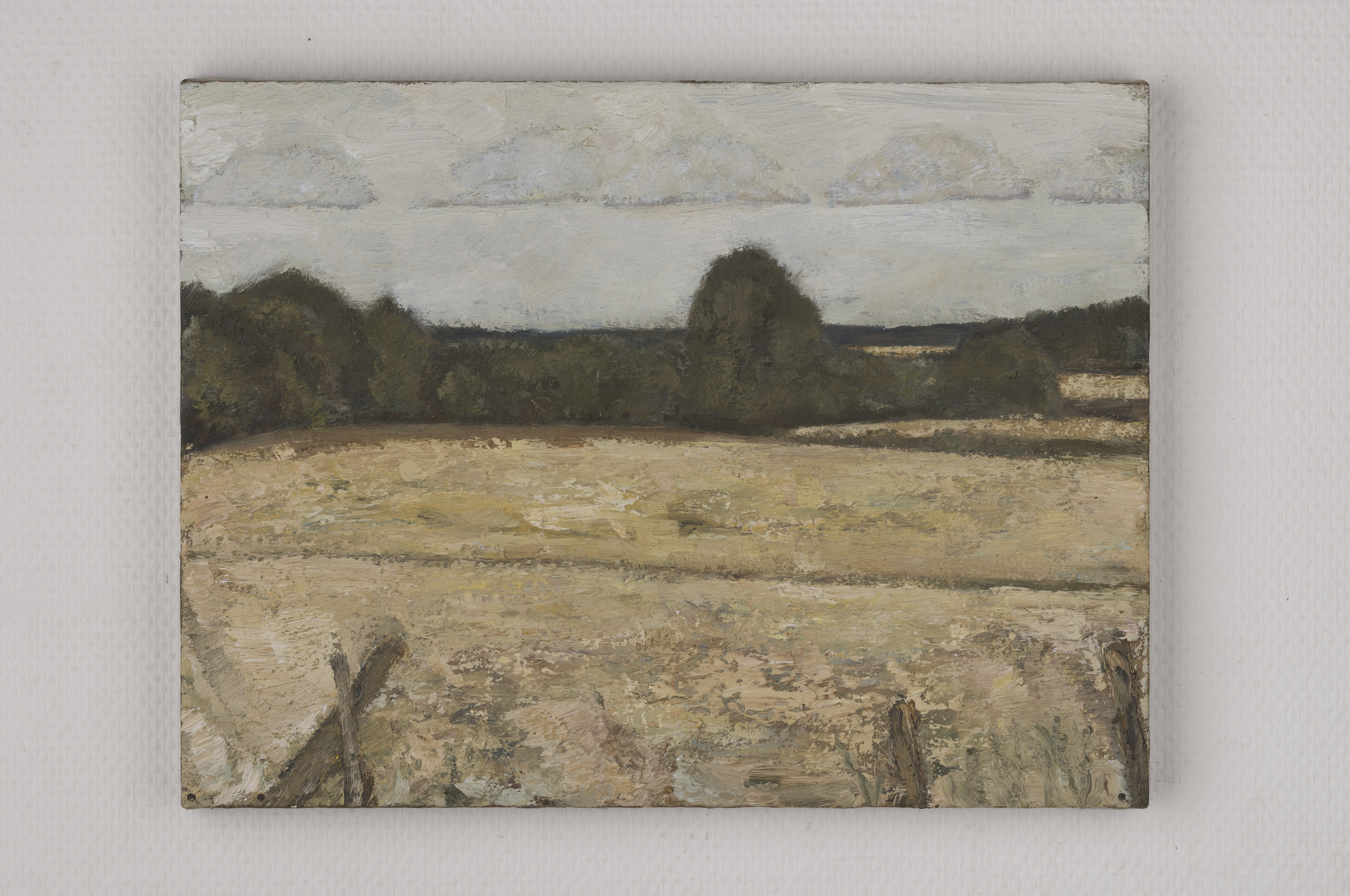
High Five, 2011-2012, oil on canvas, 30×40 cm
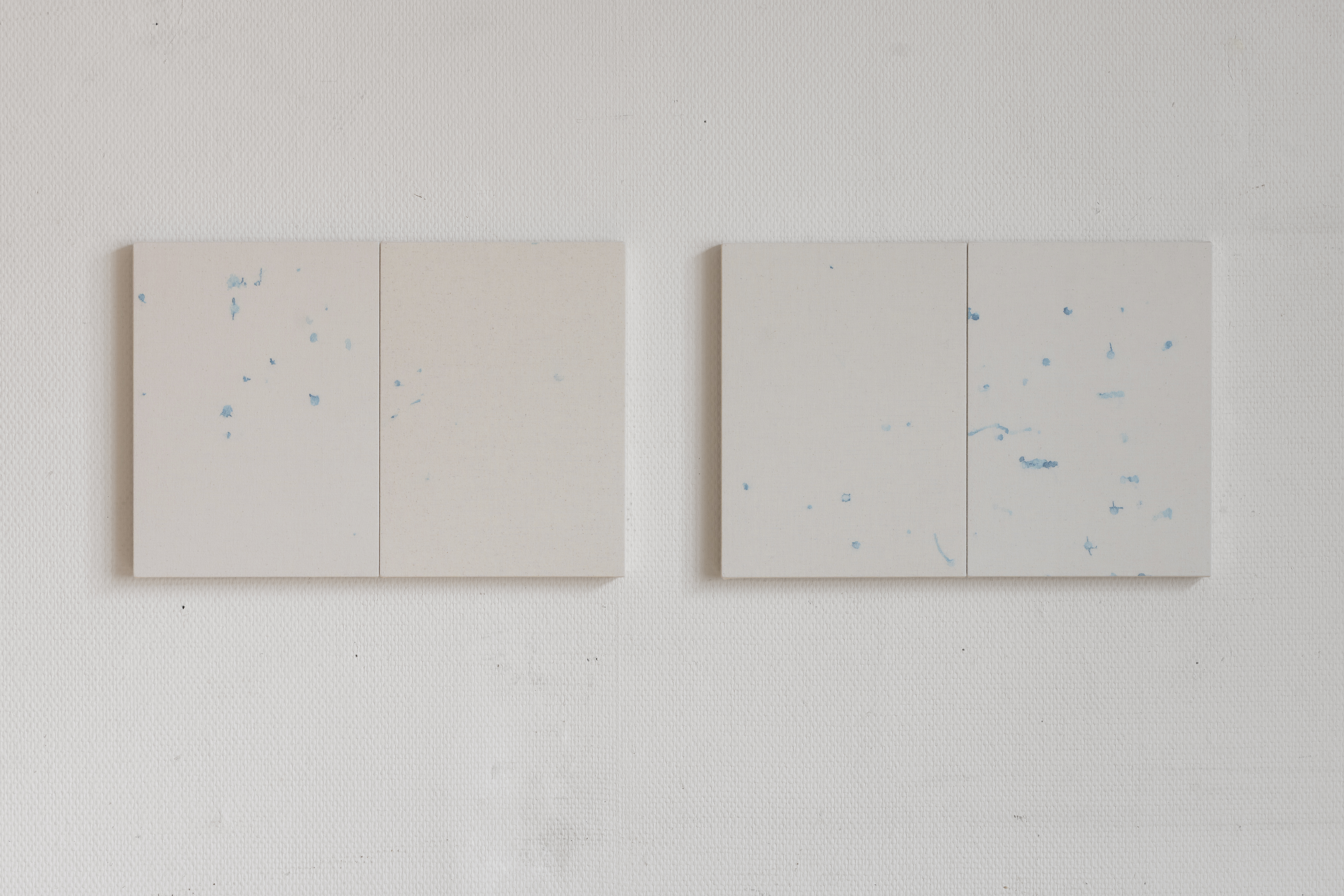
Travelnotes, Series, 2025, embroidery on canvas, each 30×23 cm
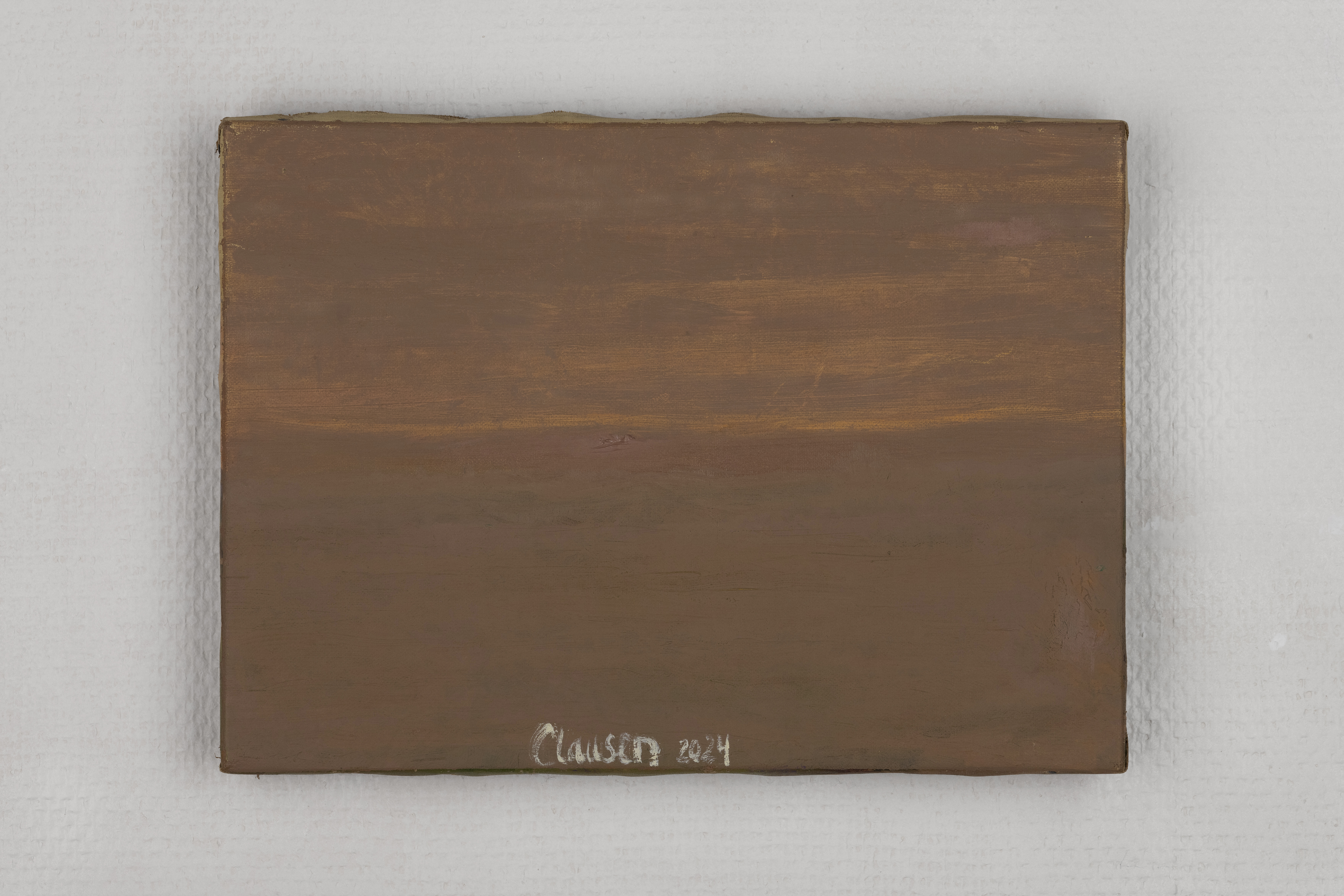
Untitled painting (sunset), 2024, oil on canvas, 23×32 cm
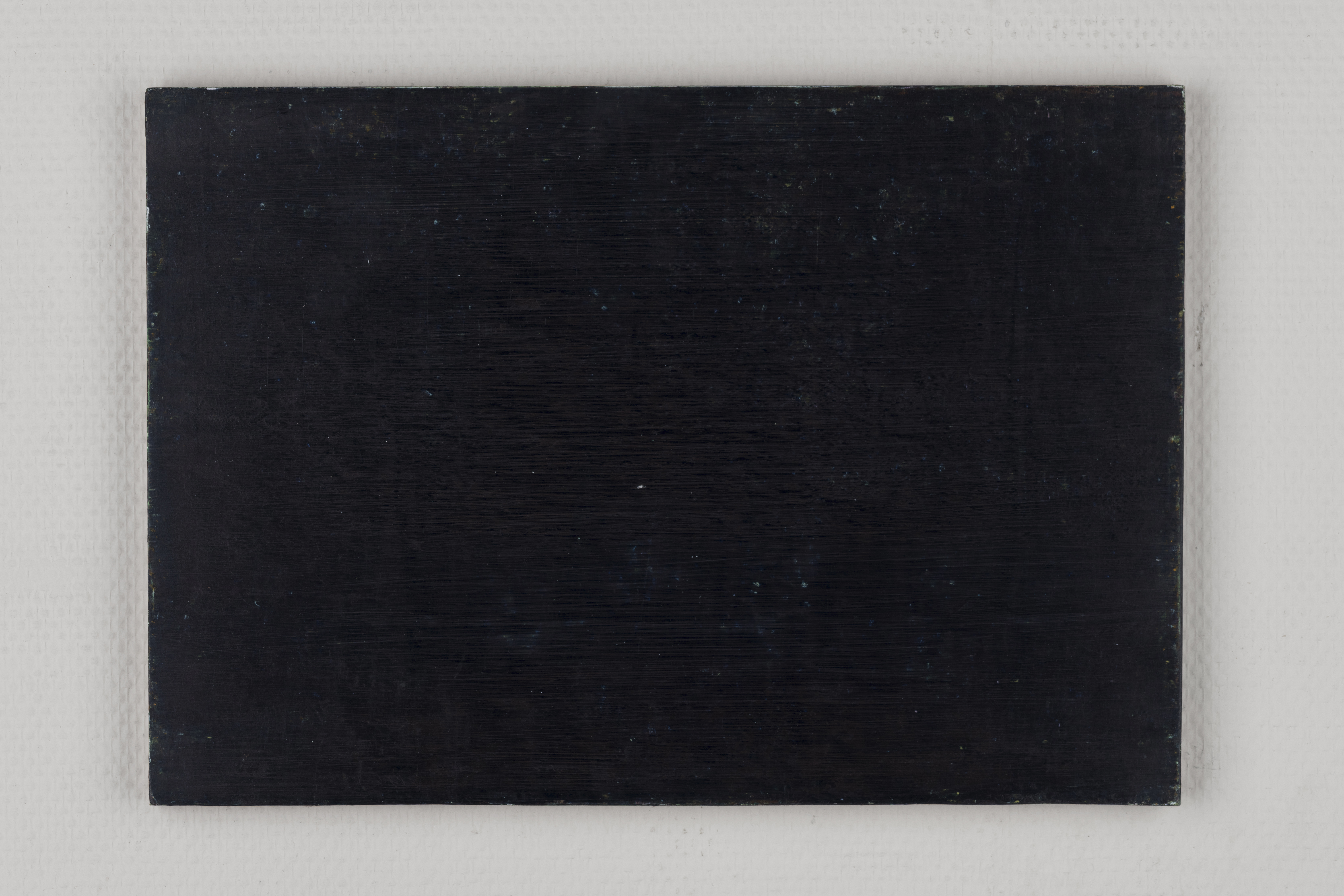
Schwarzestestein, 2023, oil on wood, 27×40 cm
Knowing the history of a sport, or being able to reel off results and statistics from memory, has nothing to do with what you learn by practising it professionally. However limited their vocabulary, practitioners will tell you about sensations, mental processes, tricks and magic. They will have “seen things”—to borrow from the replicant Roy Batty’s monologue in Blade Runner (1982)—that no commentator could ever claim to have seen, or truly to know. Of course, you also need to know which questions to ask.
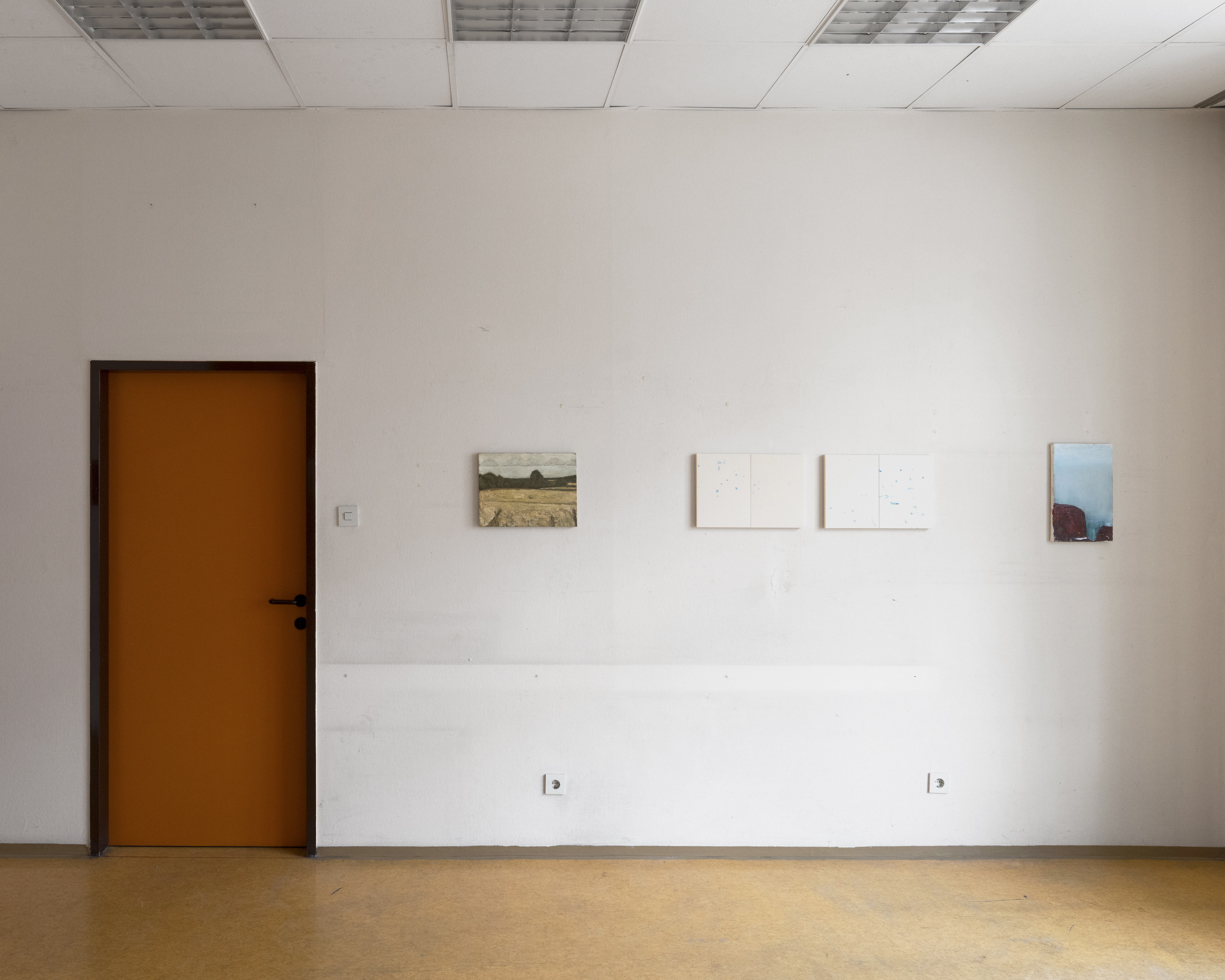
But before this analogy, like every analogy comes under fire from the sceptics, let me invite you to look at the works in this exhibition as a spectator granted the rare privilege of meeting the players on the field. Ask them. Don’t be shy! They may talk about something else, or give you no answer at all. You may even find them unlikeable. But once you have met them, the works before you will acquire expressive possibilities unknown even to the artists themselves. They will vibrate with a new energy. They will grow warm. They will take on a particular tone of voice that you will always be able to recognise.
Mirror, 2022-2026, oil on canvas, 40×30 cm
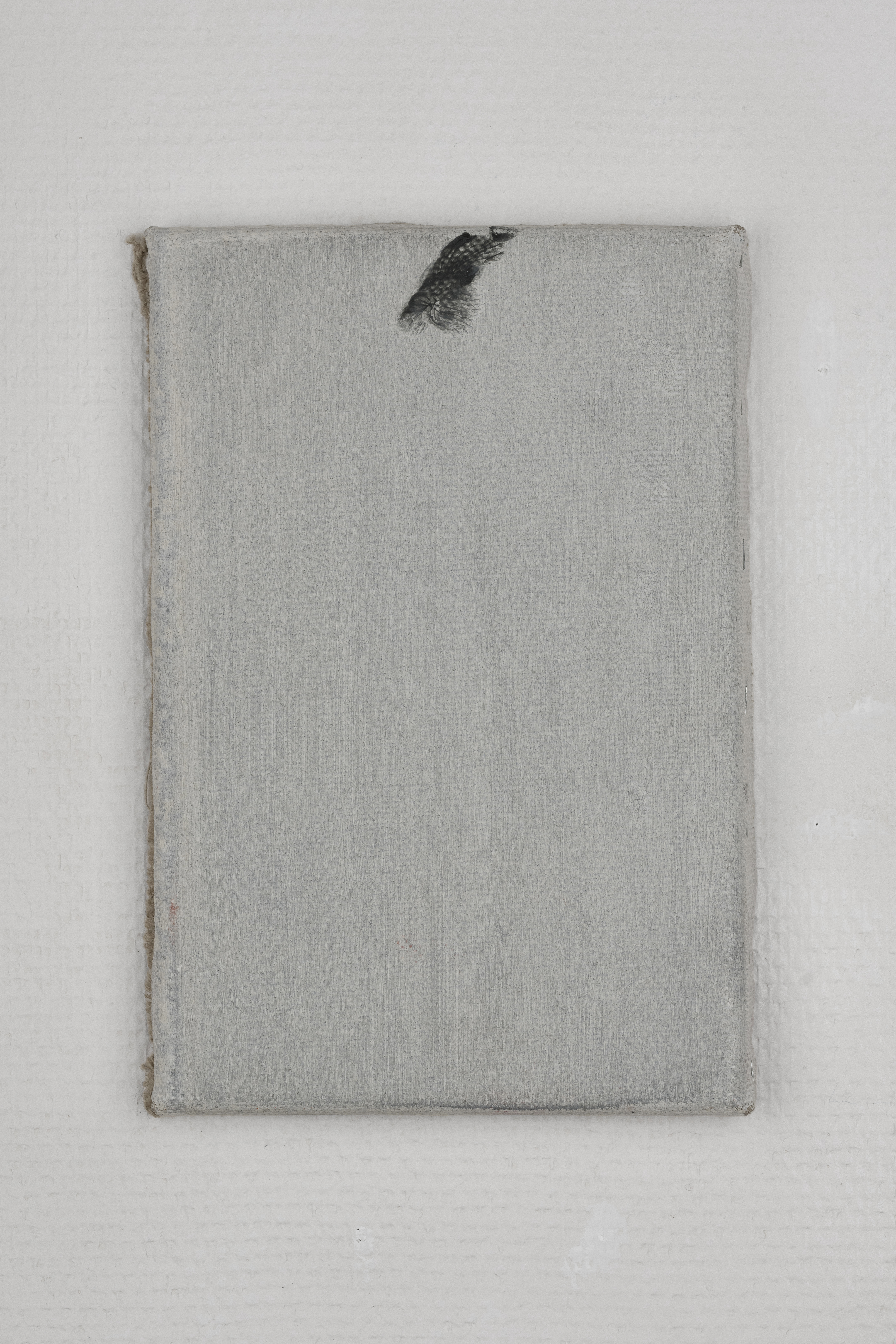
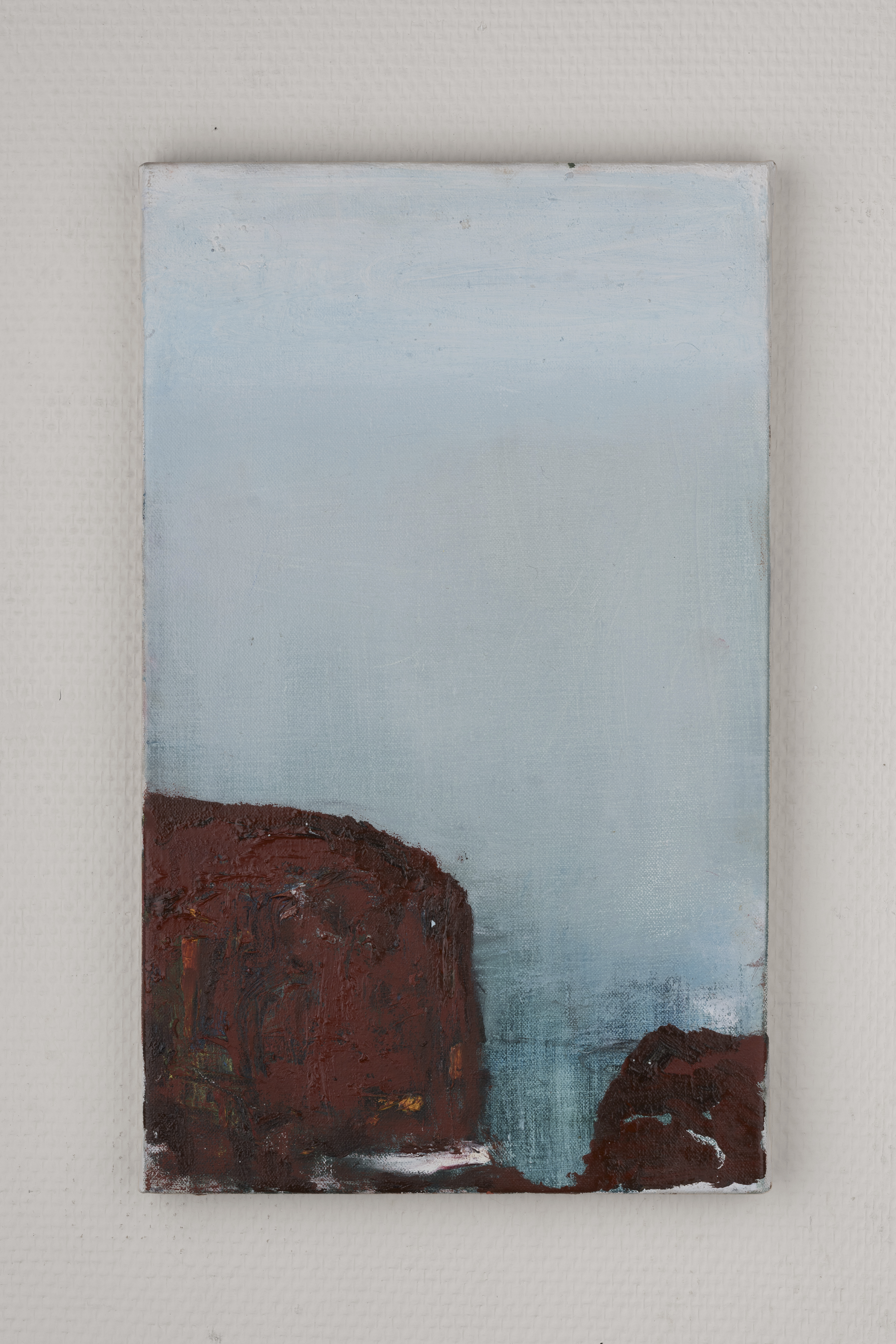
Untitled, 2025, oil on canvas, 40×24 cm
Then you will no longer ask whether they are beautiful. Once the work and its maker become connected in your judgement, a purely retinal response is no longer enough. Matter becomes a person, and vice versa. The eye is no longer alone.
At this point, only one clarification remains. Faced with certain artistic positions, it is easy to fall into the trap of dualistic thinking and treat abstraction and figuration as the opposite poles of a single magnet. They are not. Art is always an abstraction of something. As such, it always ends up representing something, even when it sets out to represent nothing, as Concrete art did. A more useful question, perhaps, concerns its degree of expressiveness. This is only partly an aesthetic question, in the sense of one concerning visual perception. Mind you, this holds true in every period and every part of the world.
November 17, 2026

