
The Adventures of Mr R.F. (From a Conversation with the Hero)
From Ettore Sottsass and Fernanda Pivano’s living room to Kabul: the path of a career that would be unthinkable today.
In 1976, Mr R.F. opens his first shop in a narrow street in medieval Milan, a stone’s throw from the Basilica of Sant’Ambrogio. He is twenty-six and deals in Asian ethnographic objects. The shop is always full, since hardly anyone else in Milan sells such things. As often happens to people with a practical bent and a little initiative, he comes to the idea of opening such a shop quite naturally, by chance.
As a young man, he is drawn to the Beat counterculture, which inspires the most interesting members of his generation. He reads Allen Ginsberg, William Burroughs and Jack Kerouac, and spends time at the flat on Via Manzoni where Fernanda Pivano and Ettore Sottsass live. An article by R.F. appears in the first issue of Pianeta Fresco, an underground magazine put out by Sottsass’s small publishing house. With Ginsberg as its ‘Irresponsible Editor’, it runs for just two issues and is now a collector’s item. Meanwhile, R.F. is studying philosophy at the University of Milan, with a particular interest in psychology and anthropology. In 1970, he sets out for Kathmandu with a rucksack and a sleeping bag, looking for adventure. The Afghan landscape so captivates him that he feels no need to go any further. Before returning to Italy, he spends the last of his money on a few objects. Back in Milan, he finds he can sell them easily to friends and acquaintances. He lives with his parents and needs to earn a living. It takes him little time to see where this might lead. His next trip is his first proper buying trip. The second time in Kabul, he is already there to buy more.
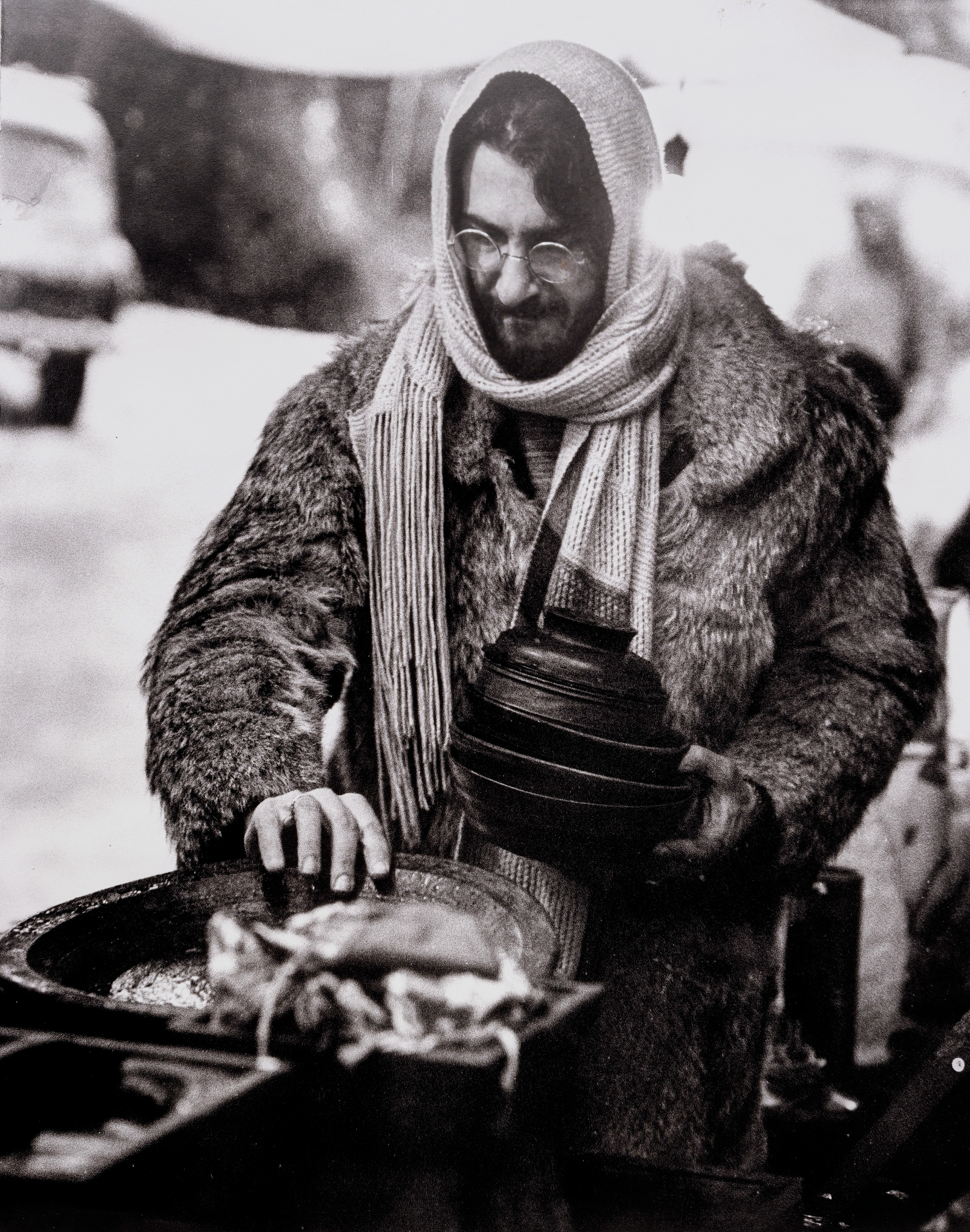
He usually makes two trips a year, for a month or two at a time, sometimes three in the summer. He travels overland. Getting to the Afghan capital means ten to fifteen days on trains and buses. Letters from Milan take twenty days and often arrive after he has moved on. There is no way to phone home. The early international credit cards are accepted only by airlines and luxury hotels, which he cannot yet afford. You travel with travellers’ cheques and cash. Having money sent to Kabul or Delhi takes weeks. Travel is still, above all, a way of acquiring knowledge few others have and perhaps profiting from it. What you learn on the road is unavailable anywhere else. The objects Mr R.F. brings back to Italy are unfamiliar things from far away, emissaries from cultures known in his own country to a tiny circle of initiates. They are exclusive in the fullest sense of the word.
Milan is getting richer, and it does not take long for a mythology to take hold. Bruce Chatwin, who worked at Sotheby’s before becoming a writer and collects objects made by nomadic peoples, arrives in Italian bookshops with In Patagonia in 1982. A few years later, The Songlines makes him a cult author. For the middle classes of Italy’s second economic boom, the pieces Mr R.F. shows in what has by now become a fully fledged art gallery are the quintessence of the exotic. They evoke the allure of frontiers still open, a sense of adventure and a freedom that consumer society is already quietly wearing away. Mr R.F. notices a paradox. His customers are looking for somewhere else, but also for a mark of distinction, a way of furnishing their social ascent. An object made in an Afghan or Indian village for domestic use or worship, once installed in a Milanese home, speaks of a freedom its new owner may neither have nor particularly want. It certainly says something about his status. Those who stay at home, after all, can follow the adventure from a distance. From the end of 1978, the Paris–Dakar Rally crosses the Sahara in winter and soon passes into legend. From 1980, the Camel Trophy sends crews in Land Rovers into the forests of the Amazon, Borneo and Sumatra. Italians win it three times that decade. And late at night, TV programme Jonathan Dimensione avventura brings deserts, jungles and faraway peoples into Italian living rooms, introduced by Enzo Piovan’s unforgettable theme tune..
On his second trip to Afghanistan, Mr R.F. fills twelve suitcases and means to bring them home overland. He pays a friend’s expenses in return for help keeping an eye on them. They leave Kabul at dawn, heading for Persia. Some fifty kilometres down the road, Mr R.F. realises he has left his passport under the mattress, along with all the money his father and some friends have lent him. He leaves his companion with the suitcases, arranges to meet him in a café in Herat and races back. These are hippie hotels. Anyone could find what he has hidden and vanish for good. But luck, without which no amount of talent will do, gets him there before the staff have made up the room. His papers and banknotes are where he left them, pressed flat beneath the mattress. Had things gone differently, his life would have taken another course.
Otherwise, Mr R.F. takes few risks. He steers clear of people at the end of their tether and of the many addicts who head east in pursuit of the artificial paradises they discovered at home. He prefers the company of fellow travellers and stays away from the seedier quarters. In India, as he sees it, treating people with respect keeps you out of trouble. The memory of the British lingers, and Westerners still command a certain deference. In Muslim countries, he observes local rules and manners. On those terms, travelling is less dangerous than one might think. He learns enough of the local languages to do business, which is to say numbers and greetings.
In northern Afghanistan, near the border with Turkmenistan, lies the last market for traditional Turkmen, Kazakh and Tajik jewellery. Nobody there speaks English. You drink tea, say very little in very few words, and bargain as one dealer to another, with respect for the person across from you. The Westerner who thinks he can buy everything for a song comes away empty-handed. Mr R.F. wants to learn. He thinks this is what trade has always been. Someone wants to own a thing, someone else is willing to part with it, and between them passes a language of gestures, glances, grimaces and numbers. Across distances of time and place, an object’s value, even its authenticity, comes to matter less than what is passed, culturally, from one person to another.
Mr R.F. understands this better still in Burma in the late 1990s, when he asks the price of something in a shop out of sheer curiosity. The dealer tells him, then glowers when he makes to leave. The dealer is offended. As far as he is concerned, there is no such thing as sheer curiosity. Asking about an object means you are interested in buying it and have therefore opened a negotiation. If the price is wrong, so be it. But the interest has to lead somewhere. Otherwise you are simply wasting the dealer’s time.
In India, R.F. goes from village to village by car, looking for jewellery, embroidery and sculpture. His driver owns two or three cars for hire and becomes his closest friend there. He can barely read or write. R.F. is a Westerner, educated and wealthier than he is, yet they spend whole days together. It is an uncomplicated friendship. Things are trickier with the dealers. You never quite know whether you are paying a fair price or ten times as much.
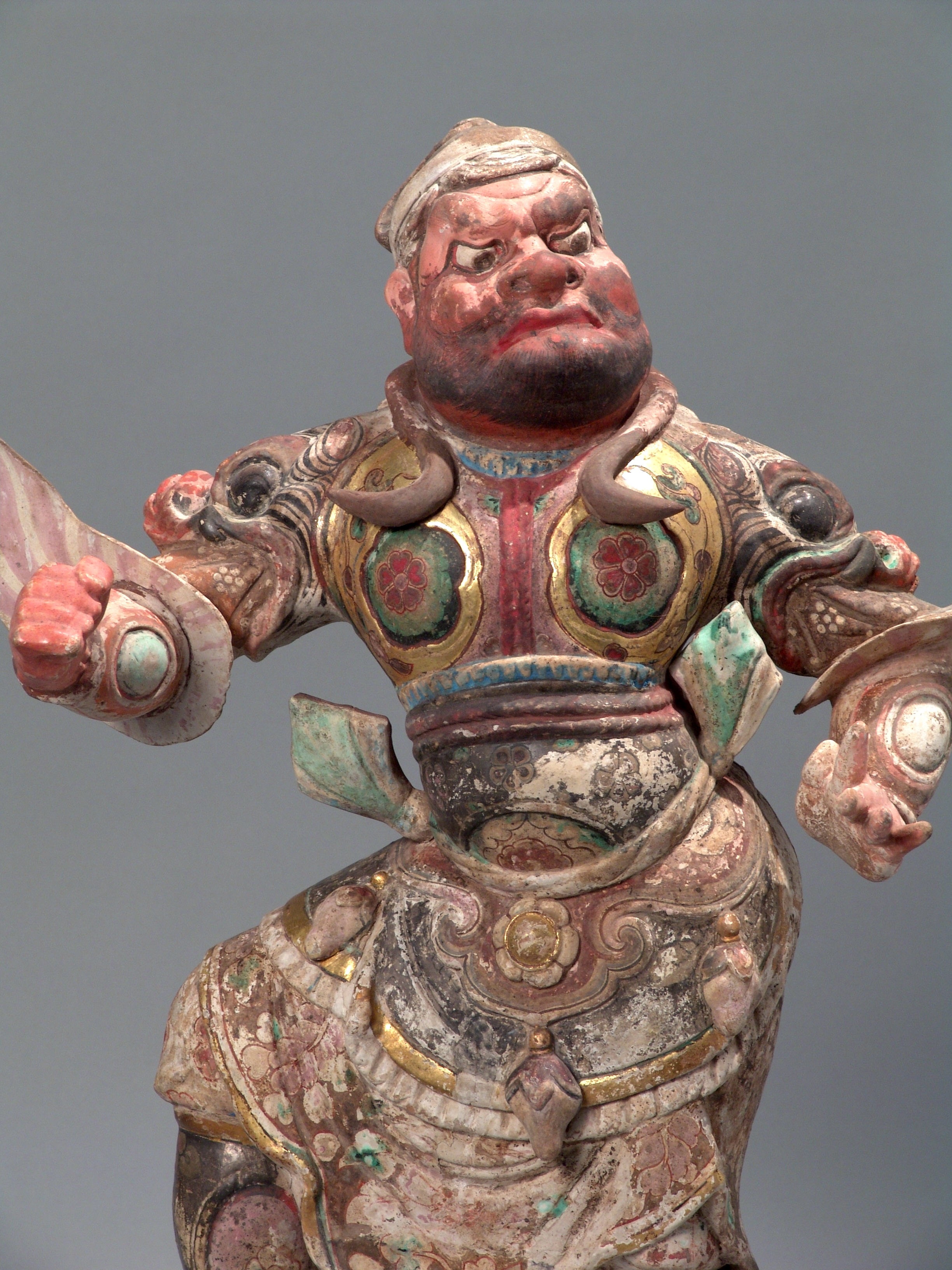
China comes last, in the late 1980s and early 1990s. R.F. finds he can read an Indian face in a way he cannot read a Chinese one. The Opium Wars, he reckons, taught China at great cost to keep outsiders from looking too closely. In those years nobody speaks English, even in Canton. Mr R.F. takes public transport and travels more or less as a tourist. Exporting antiques is forbidden, even pieces from the nineteenth century. There are no proper antiques shops. Everything goes through Hong Kong. In the meantime he travels to Indonesia, Japan and Burma. He goes to Tibet with a small group led by a scholar of Tibetan art.
In 1980 and 1981, he goes to Nepal to photograph shamans. He walks through the monsoon rains to a sacred spring on a hilltop at 3,850 metres. Dozens of shamans arrive, singing and beating their drums. Many go into a trance. Behind them, hundreds of worshippers circle the water in prayer. Mr R.F. is the only Westerner there. The only one said to have been there before him is an American Jesuit who lives in Kathmandu. Nobody pays any attention as he takes his photographs. He pursues the research for a few years, interviews the shamans and spends several days with two of them. Nobody in Italy wants to publish his photographs. They appear in print and are exhibited only in France, where there is a different sensibility towards such things. To go any further he would have to become an anthropologist, and he is a dealer. It would mean living another life. Now the shamans have mobile phones and take their own pictures.
It would be impossible to retrace Mr R.F.’s professional path today. The borders are no longer open, the material is gone and exports are forbidden. First the web and then the auction houses have put more goods in front of everyone than anyone could possibly buy. His customers came from the upper and middle classes, sometimes from the lower middle class. They had never seen such things. They were curious, wanted to understand them, bought them, and some became collectors. Now travel is easy and everything can be found everywhere. Curiosity has vanished, and taxes have impoverished the middle classes. There was a time when a farmer’s son who became a surveyor, a shopkeeper’s son who became a doctor and a factory worker’s son who became a bank manager would each furnish his home with antique furniture, silverware and paintings according to his means. It was a way of showing who he was. Today the children of those collectors tell their parents, while they are still alive, that they want none of that stuff in their homes. Contemporary art has taken the place of antiques, with its thousand interchangeable fairs and its community of travellers forever returning to the same places, where they are safe even from themselves. It is another world, one in which the market determines artistic quality, rather than the other way round.
Mr R.F. is frankly pessimistic. There is no denying it. He is convinced that our civilisation has imploded. And yet there are things he still believes in. Collecting is part of being human, because bringing together things that were once separate is the essence of all human work. Objects have a life of their own, a soul and an energetic charge of their own, just like the atoms of which they are made. Some are seven hundred, eight hundred, a thousand years old. They are fragile, sometimes exceedingly so. And yet they have outlived their makers and their owners. They have made it through wars and natural disasters. They have outlasted certain species of plants and animals. They have outlasted individuals and their fortunes. The market can forget for two or three centuries, as it did with Caravaggio, for instance. Then one day everyone starts looking for the very works nobody wanted until then. If an object makes it all the way to us, there must be something in it. Mr R.F.’s job is to see it when nobody else is looking.
Author’s note: the text you have just read was written on the occasion of the exhibition that Conceptual Fine Arts dedicates to Mr. R.F., bringing together a selection of works from his collection. The exhibition also features two tables by Francesco Joao and a series of lamps designed by Mario Uliassi, courtesy of Triangolo gallery.
November 19, 2026

