
At the show with the artist: writer Chiara Zocchi visits Thomas Hirschhorn in Sardinia
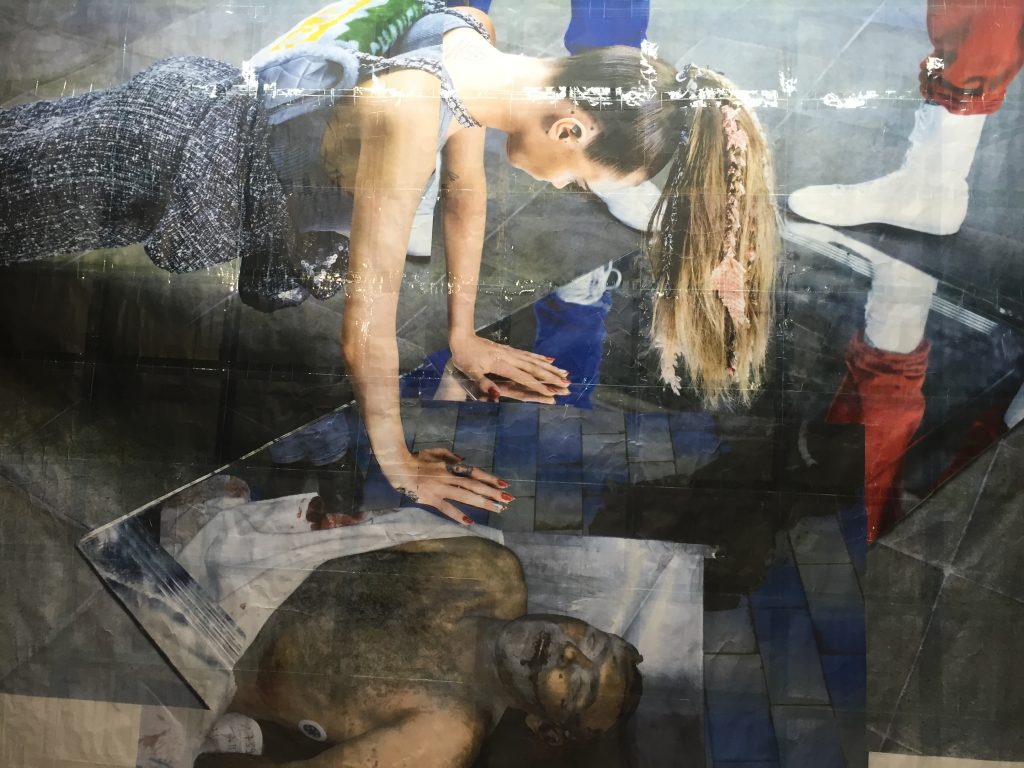
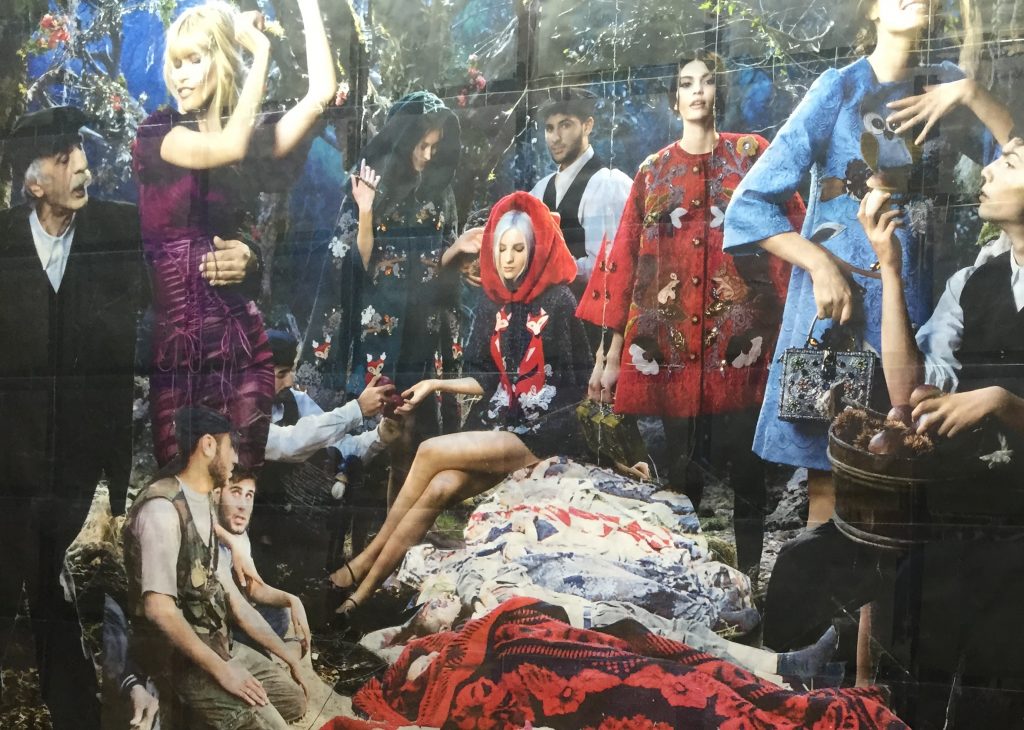
When images enter our sight, quickly, they don’t destroy themselves after being used. Our involuntary memory cuts, pairs and pastes them creating new compositions unconcerned about their original nature. We don’t see these mental collages, but Thomas Hirschhorn does, and forces us to stop and think about this process. Then we realize that something got lost, and that the paper is suffering because it has been cut and pasted not as nothing had ever happened.
Hirschhorn lets us read through the lines of his complex visual language by comparing, for instance, the reflection of a model’s hand with that of a killer’s foot. Both the reflections have a visual function, yet without any sensitive filter. Thus they can be metaphor of a critic thought, and an on-going discourse about sensitivity indeed. Among the artist’s interlocutors is philosopher Marcus Steinweg, present-and-visible character of a recent Hirschhorn’s work Flemme Eternelle, that took place at the Palais de Tokyo in Paris ; so as, present-but-invisible protagonist was the poet Manuel Joseph.
Another reference, in collages, Hirschhorn shows me is in the huge work at the end of the Project room at MAN in Nuoro, where there is a similarity, both in the appearance and in the outfits, between the protagonists of a fashion campaign and those of a violent episode. It is just a formal similarity, which however projects a completely unexpected meaning. It is indeed a sort of oximore ‘significanti-significati’.
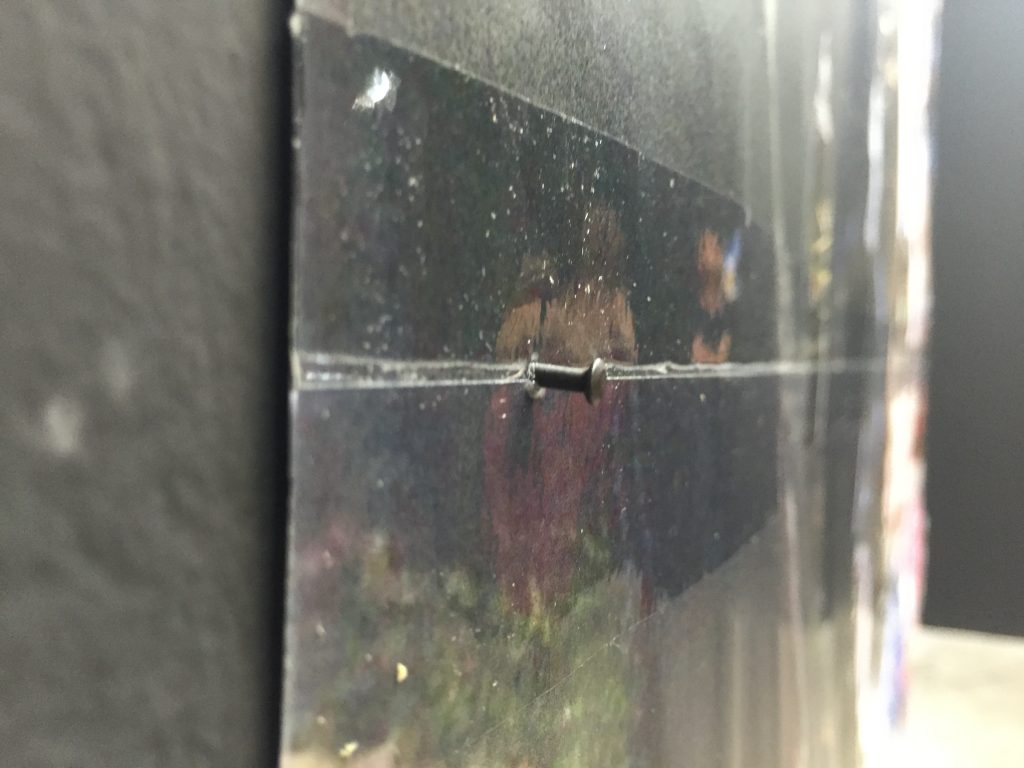
« I wanted to realise this work through the use of collage because everybody can create a collage – said the artist during the opening – including children ». His art practice employs poor materials, thus evoking that rem tene verba sequentur thereby the content always supports the simplicity of words, or in this instance of matter/material. Even Flamme Eternelle was a temporary (yet resistant) world, made of accumulated tyres, cardboard, marker pens’ writings, and a newspaper, photocopied and clipped, spread all around the museum’s space. There is no shadow of that radical-chic formal precision typical of the kind of art that loves to look itself in the mirror before being shown.
Hirschhorn had been in Sardinia before to visit Casa Gramsci, in occasion of his ‘participating sculpture’ titled Gramsci Monument, whose contents were expressed in front of few ‘present’ visitors. « Empty chairs must be supported » recently asserted the artist in this regard during a workshop at Laboratoires d’Aubervilliers, in the lively Parisian outskirts. Disseminaton.
November 21, 2022

