
François Durel: What Skin Remembers
Tactile, erotic, uncertain. François Durel’s sculpture, becomes a site where control and care, violence and tenderness, meet.
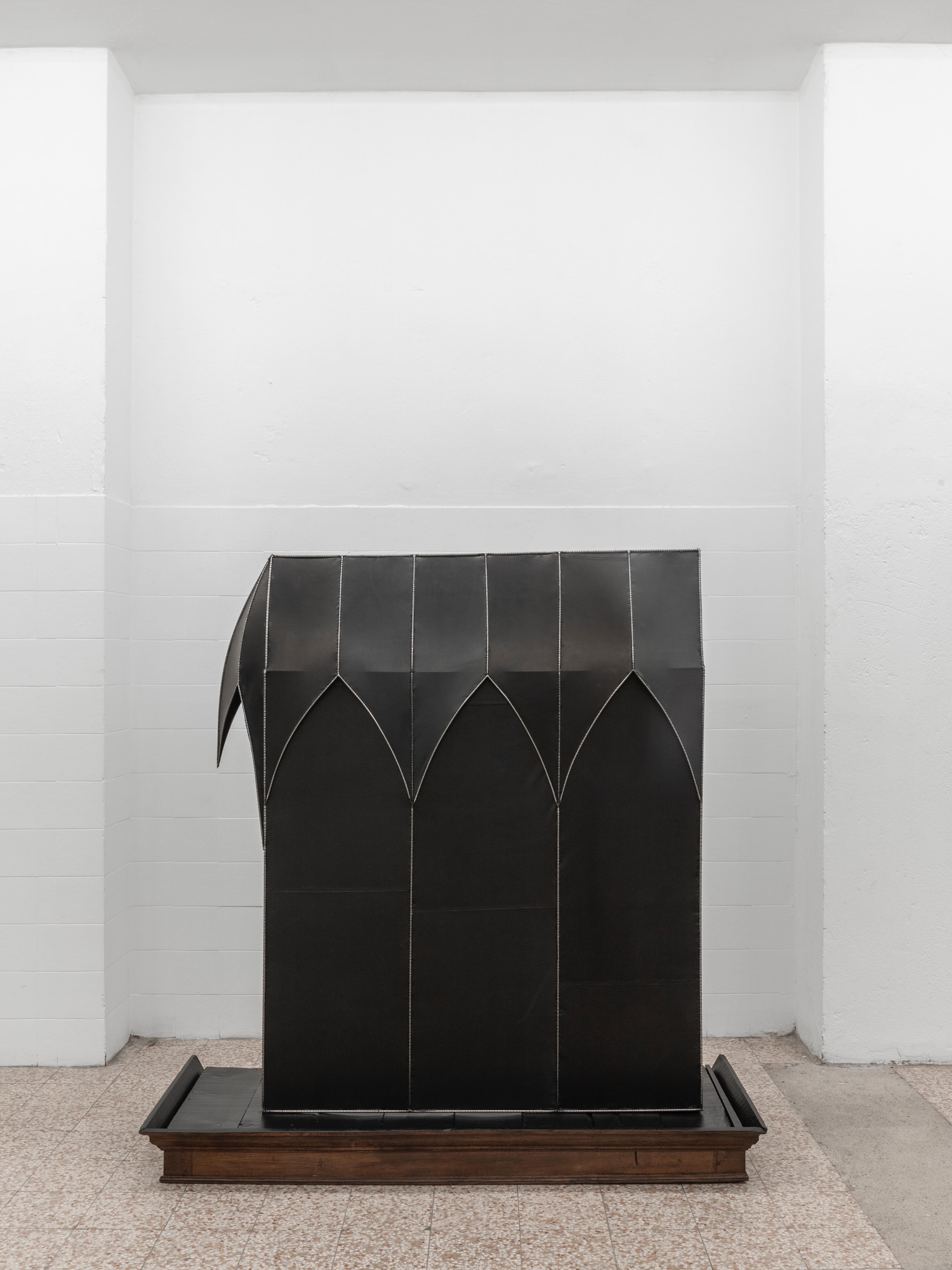
I found myself in front of one of François Durel’s sculptures — a kind of cathedral, constructed not in stone, but in softened metal and hand-stitched leather. It stood tall, quietly monumental, like a remnant of some devotional architecture that had lost its god but kept its structure. Durel spoke of his fascination with Gothic buildings, of their verticality and their promise of transcendence. “When the ceiling is high enough,” he said, “our perception of space is altered, like expanded. It produces a sensation of clarity and release, but also a kind of forced humility.”
That phrase stayed with me. It became a way of thinking about his entire practice — not just the sculptures, but the affect they carry, the memory they hold, and the very precise way they refuse the separation between the intimate and the architectural.
François Durel was born in 1993 and grew up on a farm in Normandy. The kind of rural childhood that doesn’t appear in art school application essays. “I grew up in the middle of nowhere,” he told me. “That liminality shaped my sense of reality in ways that allowed me to develop a strong imaginary at a very young age.” Queerness, in that context, wasn’t denied — it simply didn’t exist in language. “It was more like an atmospheric absence,” he said. “A sense of watching life unfold from a slight distance.”
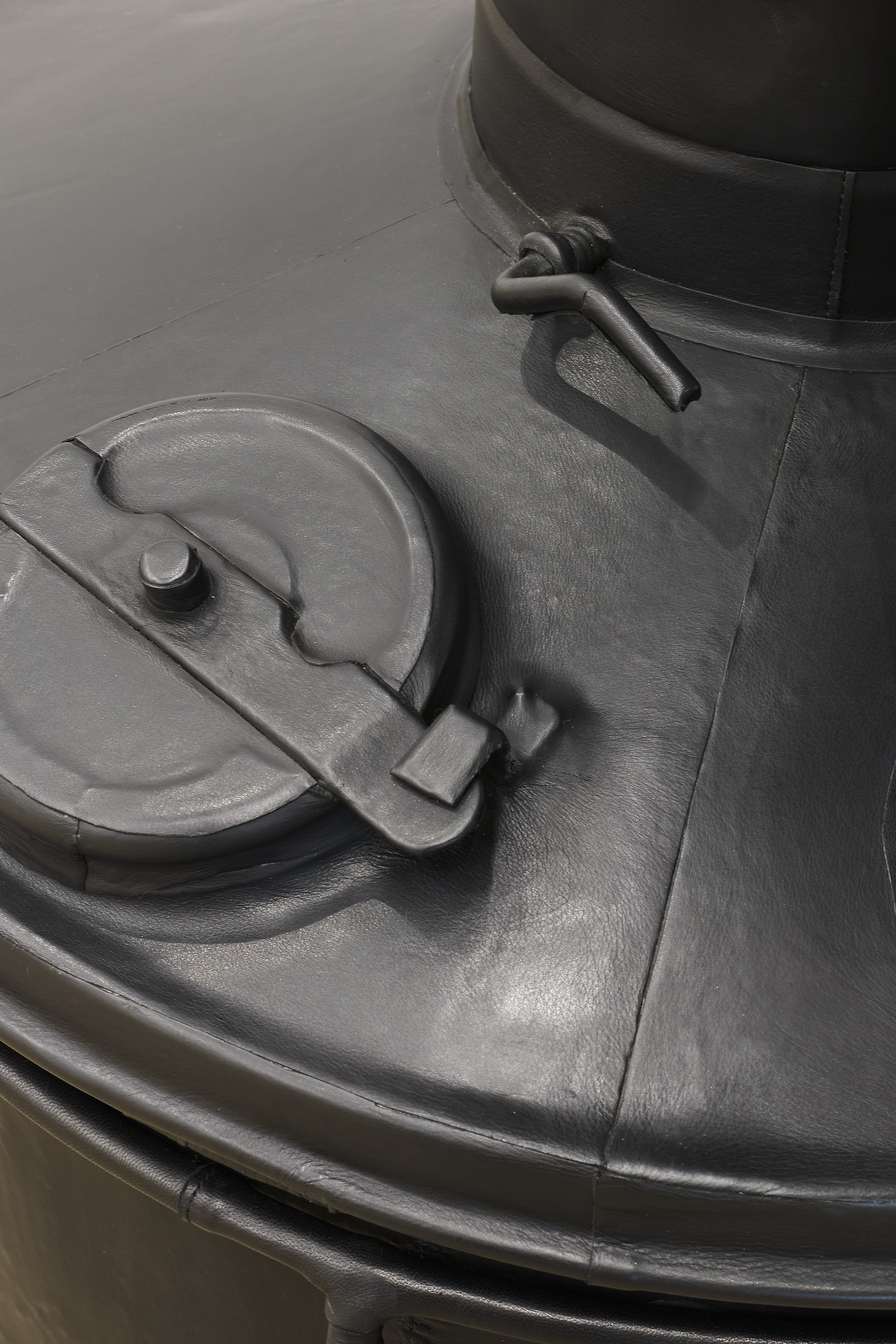
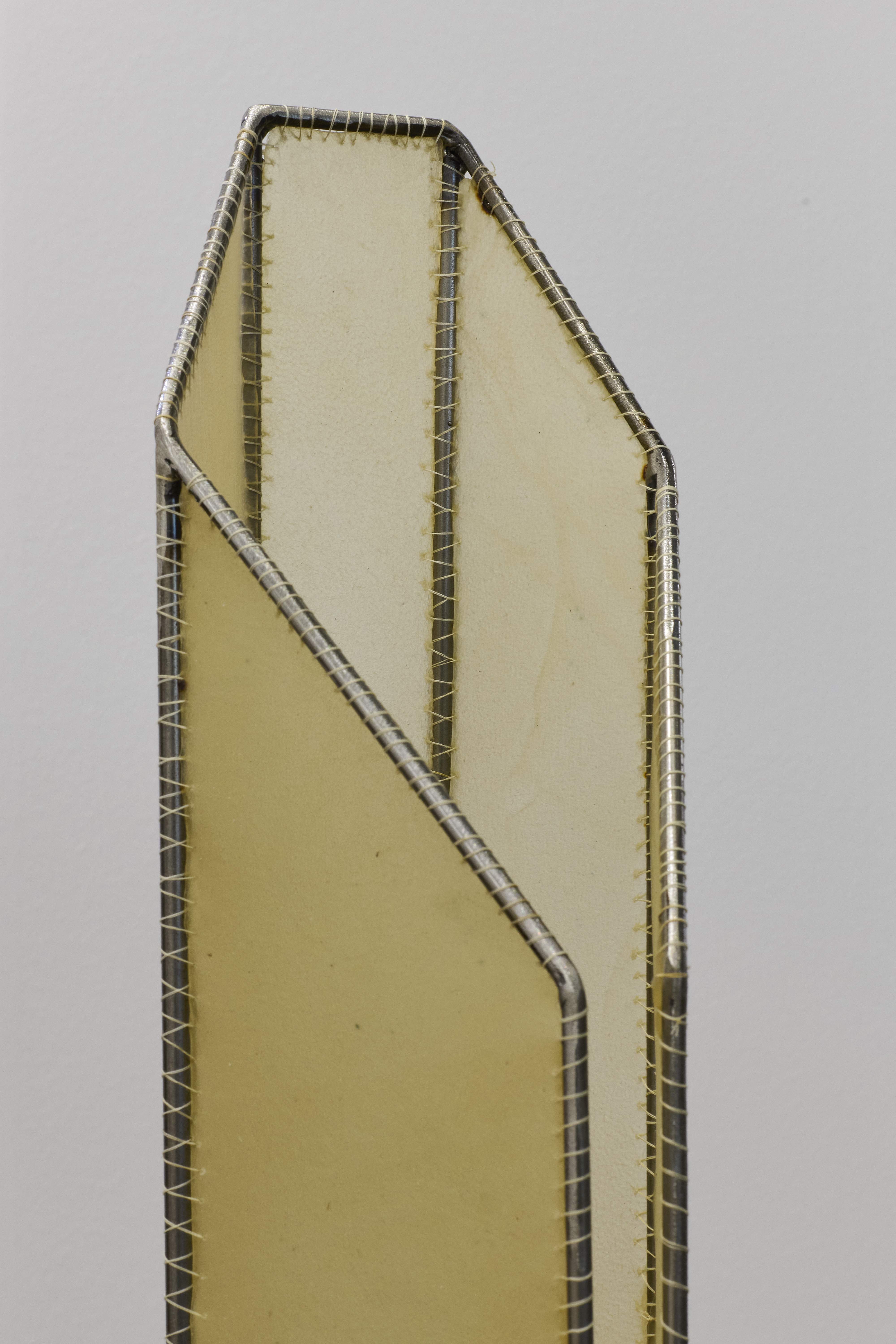
It shows. Durel’s sculptures feel like they come from someone who’s always observed systems — of power, of gender, of labor — without quite entering them. Many of his works are made from recovered farming tools, which he wraps in leather, like relics or offerings. “There’s something intimate in that gesture,” he said. “Taking these symbols of rural masculinity and enclosing them in a material that evokes both protection and desire.” The leather, he adds, is a second skin — not just covering, but softening, disarming, re-signifying.
This isn’t just about material play. It’s about ontology. By wrapping these tools, Durel removes them from their function and lets them exist in another register — tactile, erotic, uncertain. Sculpture, here, becomes a site where control and care, violence and tenderness, meet.
But it wasn’t until 2013 that something in him shifted irreversibly. During his first year at art school, he visited Pierre Huyghe’s retrospective at the Centre Pompidou. “I stayed in the space for five hours,” he said, “and could’ve stayed five more. That show gave me a sense of freedom I’d never experienced before — like I could do anything. That there were no limits.” Huyghe’s heterotopias showed him that art could be a space of temporal elasticity — not representation, but experience.
And Durel’s work, too, resists capture. It doesn’t resolve anything. It accumulates. Even when it flirts with monumentality, it remains ambiguous, permeable. He speaks often of thresholds — between visibility and concealment, body and object, function and fantasy. His sculptures feel post-minimalist in spirit, not just for their formal rigor, but for their emotional tension. There’s something of Eva Hesse, Paul Thek, even early Bruce Nauman, in the way the body is evoked through pressure, sag, restraint. “I’m drawn to moments where form collapses under the weight of affect,” he said.
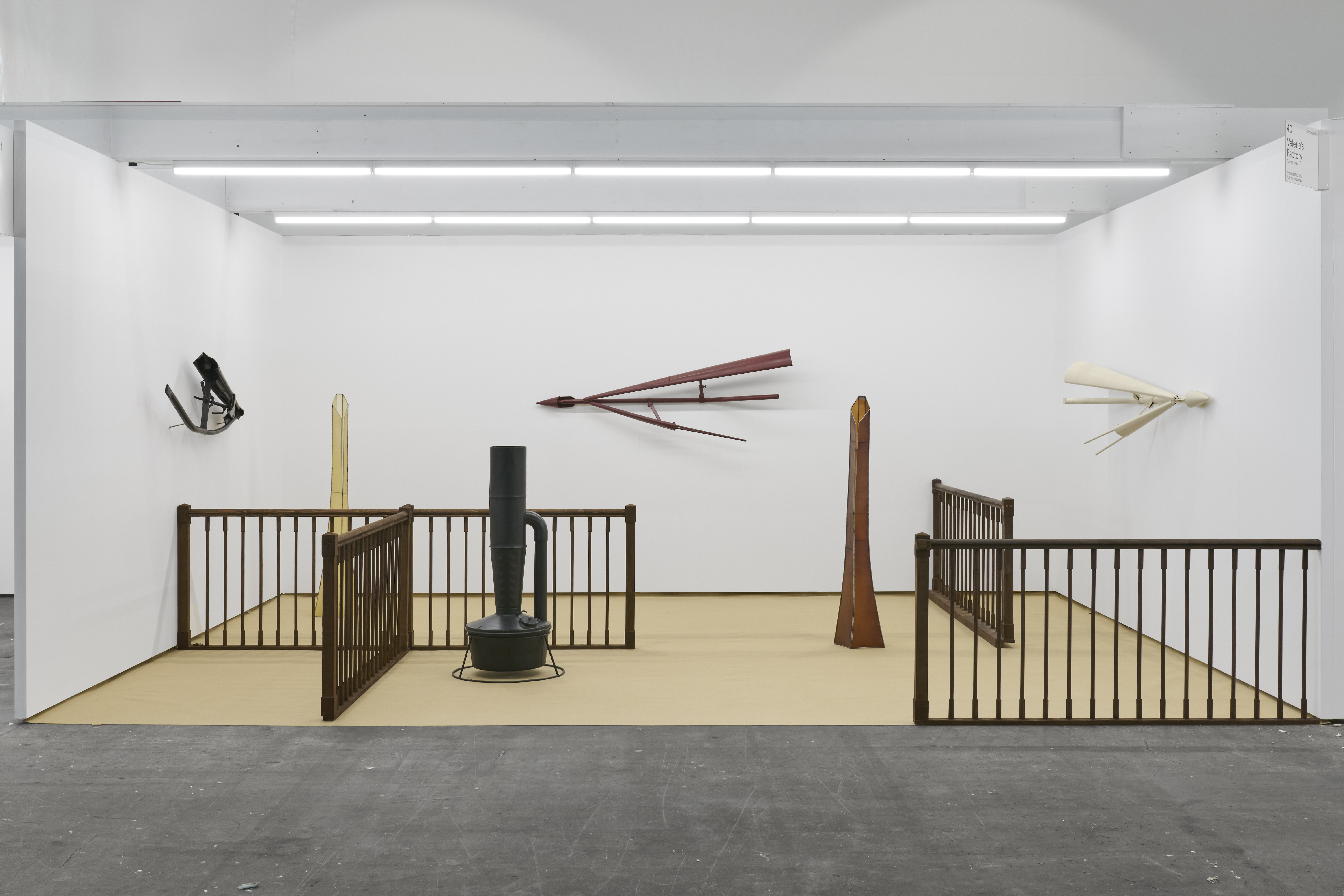
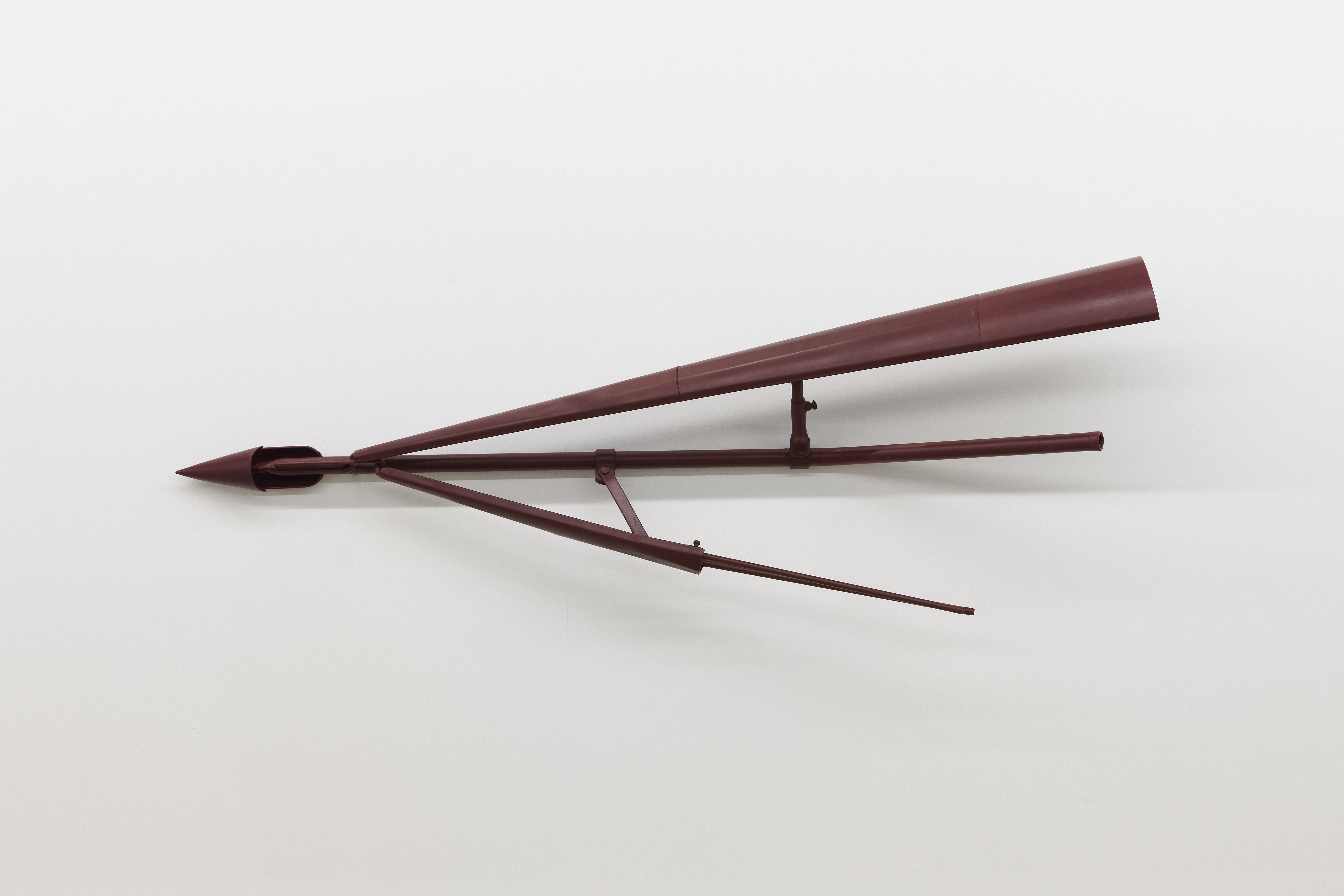
At LISTE, the fair where I saw his latest body of work, Durel presented a group of sculptures based on harvesting machine dividers — objects used to split fields into rows. He wrapped them in leather and arranged them in a kind of disjointed maze. The result was disorienting but compelling. “I wanted the booth to feel like a landscape of tensions,” he said, “where constraint carries an erotic charge, and where the language of utility gets re-routed into memory.”
Walking through it, I didn’t feel instructed. I felt included — in something physical, yes, but also psychic. The kind of inclusion that doesn’t simplify or decode. The kind that gives just enough space for you to sense what’s there, and what’s been hidden beneath.
François Durel’s work doesn’t move in straight lines. It circles around things: authority, memory, desire, the body. What he wraps in leather is never just a tool. It’s a threshold — and maybe also a wound, still breathing under the surface.
September 9, 2025

