
Luc Haenen: A Collector’s Journey Through Crisis and Change
25 years of collecting contemporary art, in a changing (art)world; are we prepared for what is (to come)?
Retiring from my career as a heart surgeon suddenly gave me the time to look back—and to realize that our contemporary art collection has, in fact, been growing for 25 years. I also became increasingly interested in the parallels between the global art world and the healthcare sector. In both fields, the same lack of agility in adapting to disruptive forces persists, with institutions holding tightly to historical formats.
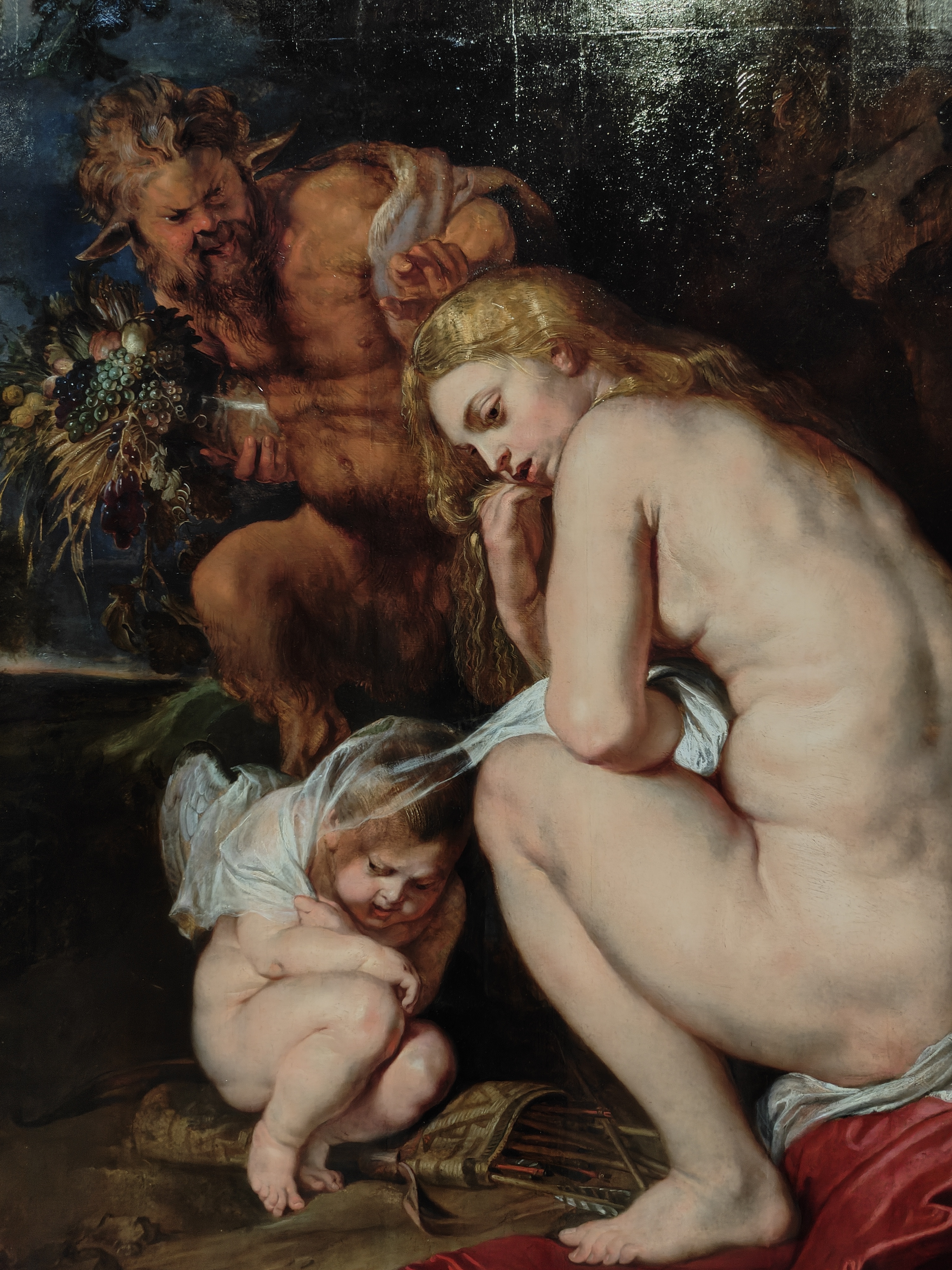
One might wonder: what does collecting art amount to? What purpose does it serve? Like many collections, ours has been shaped by family history and cultural environment. In my case, it was not the modest family home that played the decisive role, but rather the city of Antwerp, with its five Baroque churches and the Saturday Holy Mass we were required to attend. Of course, Antwerp exposed me not only to the beauty of the old masters in its churches, but also—very early on—to their works in the Museum of Fine Arts, especially thanks to the Rubens Room.
I remember a pivotal moment in the trajectory of my art collecting. During a conversation with one of my heart patients I noticed a book on his nightstand. It was about Vassili Kandinsky, its cover showing Landscape with Red Spot from the Peggy Guggenheim Collection. That encounter sparked my curiosity and led me to visit one of the local galleries, De Zwarte Panter. Officially the oldest continuously operating gallery in Belgium, it was the first place where we purchased a work of art.
After collecting local artists, we quickly outgrew the local gallery circuit and began travelling to the great art cities of the world.
The world passed through the financial crisis of 2007-2008, followed by the pandemic in 2020, the war in Ukraine, the ever-growing crisis in the Middle East, and many others profound geopolitical shifts. Since COVID, we inhabit a mentally altered world — one increasingly shaped by screen-time-devouring social media.
In the wake of AI and a surrounding polycrisis, does the world still need art, literature, poetry, provocative thoughts, philosophy, theatre, opera, ballet? Or do we only need our screens — and what would be those screens without all of the above? The choices for how to spend our free time are ubiquitous. The battle for attention is unequivocal, as is the struggle to get people off of their couches. With the prospect of even more free time ahead (perhaps spent at home), the fight for attention spans will only intensify.
The art world, much like the healthcare system, remains rooted in conservative formats and operates within complex, interactive, multi‑stakeholder environments. Artists, much like doctors in training, still work within a master‑teacher (or master‑apprentice) model. Artists and museums often present themselves as though we were still in the Habsburg era, when the first institution of this kind opened in Vienna [Ed. note: in this regard, see our interview with Hans Adam II of Liechtenstein, nephew of the founder of that museum]. Healthcare, meanwhile, often functions as if Florence Nightingale were still just around the corner — albeit now with a laptop in her hands. Both systems rely on the assumption that those who enter a museum or a hospital will leave improved, either as better people or healthier ones. And while we may believe that art makes things better, not everyone considers it particularly useful or impactful.
From the artist (or art worker, much like a healthcare worker) to galleries and museums, and on to collectors: can we adapt to an ever-changing world? Or, from a more pessimistic perspective, have we waited too long — have we failed to adapt? Is the ground slipping beneath our feet, or is this merely a low point before an ascending curve?
The notion of the art world on death row had already emerged before COVID and was once again pronounced during the pandemic.
The execution, however, did not take place. Public and private funding kept the arts alive, and after the relatively small purge that the pandemic provoked — fatal for some art centers and galleries — the money did not always cure. A reshuffling followed. Some galleries became larger and more global, relocating or expanding toward the Far East. David Zwirner, Hauser&Wirth, Thaddeus Ropac, Gagosian, Esther Schipper, Perrotin, and Gladstone all established presences in Hong Kong, Seoul., and beyond. Mid-sized galleries, however, suffered the most, and many disappeared.
When COVID hit in the first months of 2020, no one could predict that the virus would change the world in ways previously unimaginable. An yet, we all thought it would change even more — that we would reorganize, become more aware, gentler, perhaps even better. What we chose to overlook was that the support and funding for the arts during COVID (as in healthcare) would end as soon as the pandemic subsided — and, in many cases, would have to be repaid. It was never intended as a free ticket to ride. Large contemporary art hubs such as Berlin subsequently reduced cultural funding, despite massive protests from the cultural sector.
Already in early 2019, long-term projections in healthcare were outlining how patient care might look in 2025-2030. Wars in Ukraine, Sudan and Gaza were not foreseen, but transformations in healthcare and culture were. Through COVID, these changes were implemented far more rapidly: shorter hospital stays, increased day surgery — even for complex treatments — and, most notably, a significant reduction in inpatient care, including for older and more fragile patients. The pandemic accelerated the future by several years.
With regards to the arts, COVID drove more people online than ever before, and social media temporarily (or perhaps not so temporarily) took over much of our cultural and emotional lives. AI, as we use it today, was still to come. During the pandemic we participated in countless online events and talks. Online Viewing rooms (OVR’s) became the primary way to maintain connections with galleries and artists. Buying art online experienced its first truly global success. Was this a turning point?
Looking at the Art Basel Art & UBS Art Market Report by Arts Economics 2024 (ABAR 2024), perhaps it was. That said, the report represents a very one-sided view, and its data should be treated with caution. It is important to note that during the pandemic, gallery costs decreased substantially: there were no art fairs, no fair-related overheads, no vernissages with drinks, no gallery dinners. Fortunately, it was also a moment when blue-chip galleries opened their platforms to younger galleries.
When COVID officially ended in May 2023, the art world woke up again — and, much like hospitals, the pandemic was rapidly forgotten. Thanks to human resilience, the world returned to a sense of normality. COVID surely marked a turning point, far more profound than the banking crisis of 2008, but primarily on a mental or spiritual level. As I write this text, nearly two and a half years after the pandemic’s end, few seems willing to acknowledge that the driving forces of the art system no longer hold the same power they once did. Is the art world simply pretending that it is business as usual?
My own collecting has always been driven by a quest of beauty, discovery, and new ideas — a personal need to connect with people from other geographies and disciplines. It served as a counterbalance to the strains of my professional life. Of course, this impulse can also be explained through dopamine release and shifts mood caused by arrival of new artworks at home, waiting to be unpacked and installed. Behind the scene, a dense network of social relationships has always been at work — art workers, gallerists, and artists, with whom we have developed a long-term commitments over the years. I personally never had any concern about return on investment.
At the heart of this story stands the artist — the art worker — who makes the art. Over 25 years of collecting, we met many artists, and a shared sentiment emerged repeatedly: I have to be an artist; I have to do this, it is beyond my control. As Arthur Schopenhauer wrote: Die Welt von Wille und Vorstellung (The World as Will and Representation).
Over this quarter century, being an artist has become an increasingly complex endeavour, despite the growing availability of support structures such as PhDs and artist residencies. The profession has become more technocratic; a deep understanding of social media is now essential. Artists are expected to build a strategic position within a global context, enabled — though not exclusively — by social platforms.
And yet, despite this reality, I still hear Master program teachers that once the formal education ends, young artist often rush to bric-and-mortar galleries with their portfolios, hoping to secure representation. This expectation is no longer entirely realistic. Still, artists are willing to accept commissions of 40 or 50 percent in exchange for a yearly exhibition and exposure at major art fairs — gateways to collectors and museums. Artists often judge the quality of their gallery by its presence on the international fair circuit, alongside considerations such as financial stability, personal networks, and individual support.
When Wilfried and Yannicke Cooreman attended gallery openings in the 1980s, there were usually fewer than ten visitors: the artist, the gallerist, Wilfried and Yannicke themselves, and perhaps a few passers by drawn in by the promise od a free beer. By the early 2000s, Antwerp’s galleries began organizing joint openings, drawing such large crowds that streets — especially in the Antwerp South district — were occasionally blocked.
More recently, on a dark misty Wednesday evening in October, I was invited to Gladstone Gallery Brussels for the vernissage of Rirkrit Tiravanija’s exhibition, titled (the intellects take leave).
According to Gladstone Brussels’ director, Maxime de la Brousse, planning for the show had begun 3 years earlier. Although the sorrounding streets — Rue de Laine and Rue du Cerf — were nearly deserted, the backyard of the stately early-20th-century townhouse was completely packed with young visitors. The crowd consisted largerly of those I would hope to be the collectors of tomorrow: Gen Z and Millennials. They will shape the market — unlike previous generations, for whom consumer markets were structured around the product. But do they have the means? Their parents did, but Millennials and Z increasingly feel priced out for many, even basic societal interactions. Are they waiting for the much-discussed intergenerational wealth transfer from Boomers to the Millennials and Gen Z — estimated at $84 trillion?
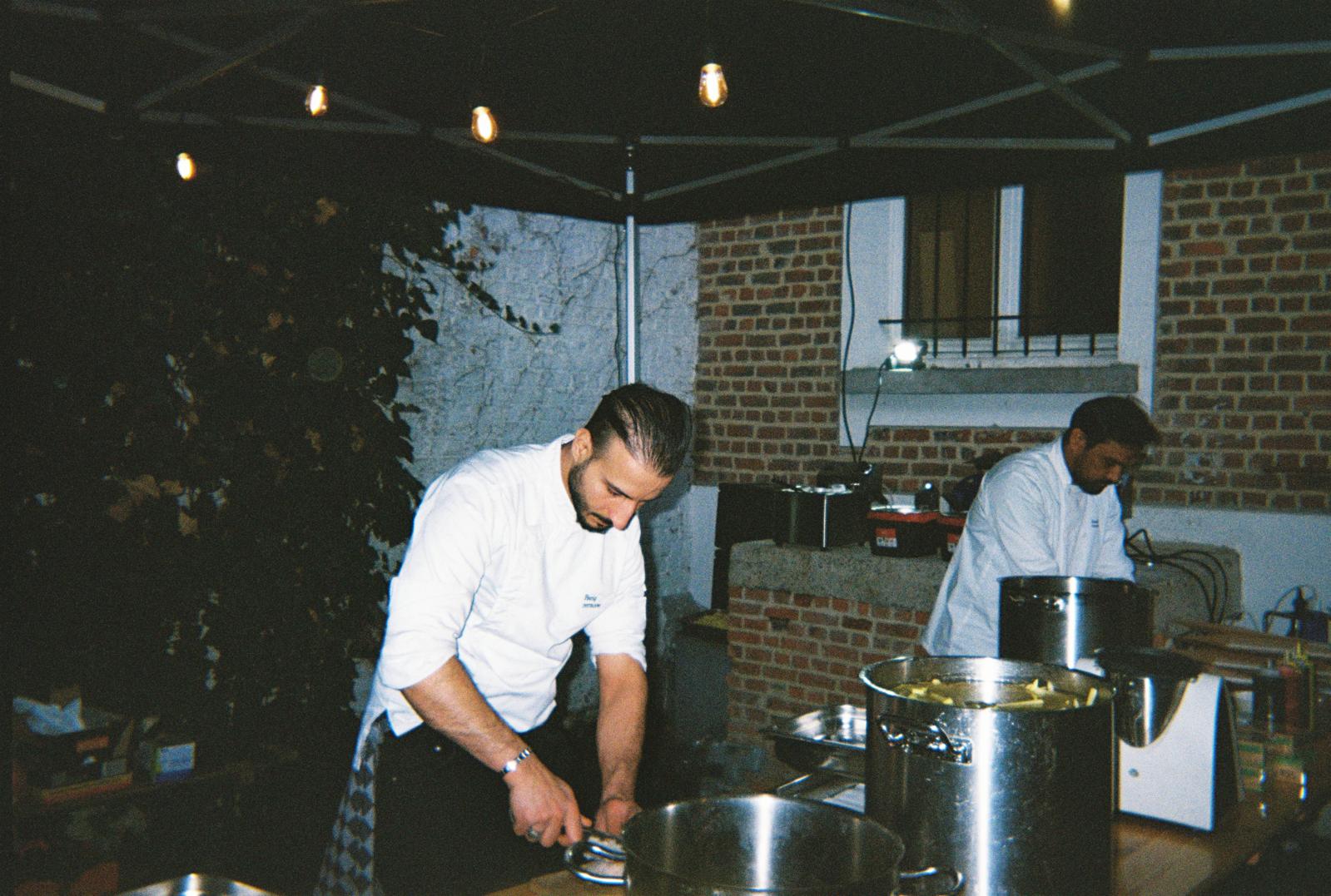
Fortunately, Nico Dockx — good friends with Rirkrit — took care of the catering: the best Belgian fries ever made, prepared by Indian and Iraqi cooks. Dockx, a visual artist, has a long-standing passion for food as a means of connecting people. Inside the building, young visitors engaged with Rirkrit’s large-scale works. At one point, De la Brousse remarked that it had been years since the gallery had seen such a crowd. Unfortunately, none of the visitors that evening purchased a work; even the smaller pieces were priced around $55,000. This, however, posed no real problem for the gallery, as sales and profit for blue-chip galleries largely stem from major art fairs.
The following day, I found myself once again in the same downtown Brussels neighbourhood, walking along Rue de Laine. On my way to number 14, I was drawn into a pop-up gallery at number 34. Inside a large townhouse designed by renowned architect Glenn Sestig, middle-aged visitors dressed mostly in black, were looking at wall-mounted design objects and floor-based works. Champagne flowed generously in elegant glasses.
A price list lay openly on display. Prices had been corrected with Tippex, though I could not figure out whether they had been adjusted upward or downward. In any case, I didn’t see any red dots.
After greeting a few friends, I continued on to Rue de Laine 14, home to Martins&Montero Gallery. Originally a São Paulo-based gallery now operates a Brussels space located near another major Brazilian gallery, Mendes Wood.
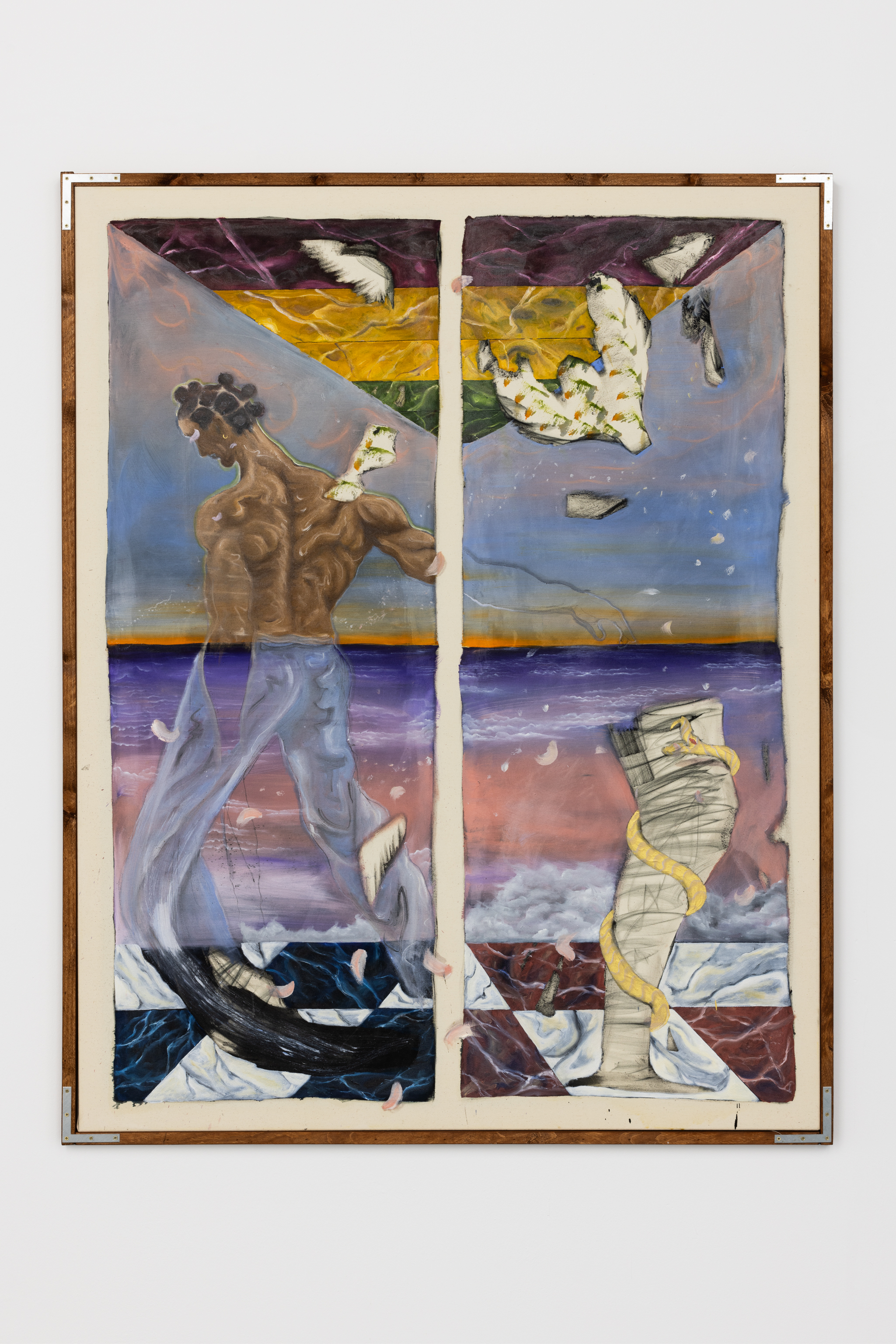
Martins&Montero was presenting works by Ana Mazzei, a mid-career Brazilian sculptor with a small base in Belgium and a piece in the collection of SMAK Ghent. The exhibition was built around a beautiful homogenous materiality concept — wood and bronze — resulting in a challenging yet elegant presentation. Works were priced around €25,000. There was a serene atmosphere. With great passion, the artist took time to explain the different aspects of her practice and paused to take a picture for her Instagram account.
As time ran short, we were eventually summoned by the gallery director to head to a nearby restaurant, L’Écaillier du Palais Royal, where tables had been prepared for the group.
Ann Demeulemeester, one of the famed Antwerp Six, entered the historic venue just ahead of me. It was a modest yet refined dinner, with Mechelse koekoek served as the plat de résistance. Jacqueline Monteiro, the gallery’s owner, radiated enthusiasm — the Brazilian spirit was unmistakable — and once again the wine flowed generously. I found myself seated alongside an eminent Brussels power collector, whom I consider, aside from myself, the only potential buyer that evening. Next to me sat one of the curators from the Brussels Kanal-Centre Pompidou and two directors of the gallery. The curator told me his job was to think about engagement and accessibility. The gallery staff, meanwhile, were keen to know which works I liked and which piece was my favorite — understandably so, as bills need to be paid. Prices averaged around €25,000.
From my professional life in healthcare, I learned to keep overhead costs under strict control. Observing the staffing levels and the expenses of maintaining a brick-and-mortar gallery, I can only imagine how difficult it must be to generate sufficient cash flow to remain profitable.
This evening felt emblematic of the broader situation: cutting-edge young galleries at the bottom, blue-chip giants with estates and emerging stars at the top, and an economically fragile mid-portion in between. It is precisely these mid-tier galleries that are most vulnerable — and most likely to disappear.
Large galleries not only continue to expand globally but also developed the capacity to present shows of genuine museum-level quality. Recently in October, parallel to Art Basel Paris, Thaddeus Ropac staged exhibitions of Rauschenberg and Brancusi show in the same building, while Gagosian presented a previously unseen Walter De Maria at its Le Bourget space.
These events also say much about the city of Paris — and about the power of galleries capable of mounting top shows that museums can only dream of. Again in Paris, after the David Hockney blockbuster had been packed away [Ed. Note: David Hockney 25, Fondation Luois Vuitton], a new Gerhard Richter retrospective opened to overwhelming acclaim. At the same time, La Bourse de Commerce – Pinault Collection and Lafayette Anticipations presented exhibitions of equally high quality. Notably, all of these institutions are privately owned.
One of the central questions in the art sector — like in any economic field where bills must be paid — is how to market products, often categorised as luxury good. Even more crucial is identifying where the market truly lies and who the client is. From whose perspective are we speaking? While I am personally convinced that art is not a luxury but a necessity — one that not only heals but also act as preventive brain exercise.
The 21st-century human being has become an experience chaser, increasingly addicted to collecting thrills in life through sports, alcohol and/or drugs, traveling, dinners, visiting exotic Instagram-friendly places, likely under the strong influence of technology and screens.
If we go out, even just for dinner, it is expected to be an experience: an immersion where all the senses are triggered, a full-body sensation — while online, sensations are mostly only represented rather than lived. In this hunt for immersion, if the artworld and museums do not put more effort into getting young viewers inside — failing to connect with the next generation of potential collectors will be unavoidable. Maybe part of the issue is the kind of experience that generation seeks, having grown up online. Some institutions manage this perfectly. For example, the KMSKA attracts a large number of visitors and creates fairly good shows, layered onto an old master and modern art collection and a café, turning a museum visit into a total experience. They ensure that every person — young, old, of any gender or race, with or without reduced mobility—experiences a mix of different periods in art history right up to the contemporary.
This is a moment when almost all cultural entities are facing a funding dilemma. The number of visitors is usually the most important metric for evaluating the value of the institution — and when that evaluation is misguided, quantity over quality becomes the essence of neoliberal problematics. But there also lies the cultural paradox of the museum: on the one hand, funders want to see as many people as possible queuing and demand accessibility for the masses; on the other hand, true appreciation of art often carries a certain exclusivity. At the same time, artists and artworkers increasingly question certain sponsors (pharma of fossil fuel companies especially) who put money in these institutions.
Flanders’ Minister of Culture Caroline Gennez froze the budget for a new museum building in Antwerp, shifted her focus to SMAK Ghent, and agreed on a new building in Ghent—even at a time when the city of Ghent faces serious financial difficulties and may need to lay off 450 employees.
Are the art fairs better off? The big galleries get their main revenue from the global Art Basel fairs. Today, an art collector could visit an art fair every week somewhere across the four continents. The vibe around the fairs is also very much dependent on its location: Basel is more serious than Miami. What does this vibe tell us? Are there simply too many fairs — or is there a real demand?
After acquiring FIAC Paris and rebranding it into Art Basel Paris, the MCH Group [the company behind Art Basel, Ed. note] has become the biggest player,, especially as Frieze London is becoming weaker due to Brexit, the strong presence of major institutions and the “big seven” galleries in Paris.
But profitability for art fairs is also becoming more challenging. Not only are square-meter prices soaring, but so are shipping and administrative costs. So the square meter price goes up and as a consequence the galleries need to have almost a sold-out upfront to break even. As space becomes more expensive, galleries increasingly need to secure something close to a sold-out booth in advance just to break even. Interesting to know is that the MCH-group reported a cumulative loss of 80 million Swiss francs for 2024— meanwhile, the number of Belgian galleries participating in major art fairs continues to shrink. Contrary to the often-repeated myth that the Belgians make the best collectors of the world, we see fewer and fewer Belgian galleries at the top international fairs. Only Xavier Hufkens Gallery — with its strong and healthy financial footing — remains a constant presence. On the other end of the spectrum, we see that a newer kid on the block, Gauli Zitter Gallery in Brussels, has managed to secure a place in the emergent sections of these fairs — still important for visibility. Alternative Models are emerging.
Anyhow, I don’t believe today’s art fair format is enough to get art lovers off their couch. Gauli Zitter from Brussels (again) organized a small curated art fair called ‘Parloir’ in Tournai, Belgium, and later during Miart in Milan. Stefano Pirovano and Triangolo used a similar format in Cremona, with ‘Concillium‘, hosted in an amazing old palazzo in the center of this beautiful northern Italian city. Both initiatives aimed for a more intimate experience — almost reminiscent of the Paris Salon: small-scale, curated, with a carefully selected mix of galleries, and dinners bringing together artists, collectors, and gallery staff. A collaborative and complimentary group of people gathered around a common interest.
That brings us to the artist’s position. When an artworker leaves art school, their aim is often — in order to make a living — to get representation from an established brick-and-mortar gallery. These galleries have global positioning and represent estates and emerging star artists. But does an emerging or established artist really need a brick-and-mortar gallery? Can an artist concentrate fully on their art while also taking care of installation, writing social media content, communicating with collectors, and building relationships with kunsthalle and museums? I am not so sure.
Since Covid, of course, online presence and showing your practice have become mandatory. As a coincidence, many collectors now discover new artists through Instagram. This gives artists a larger potential market and audience but, reciprocally, also a lot more colleagues who are competing on a global stage.
How does the collector survive the constant flow of PDFs and Instagram posts from artists? We have tried to support the younger generation as much as possible but this is becoming more and more difficult. Very early in an artist’s career, galleries begin shaping offer and demand, and because many collectors tend to imitate one another, prices rapidly soar… and waiting lists become common. Sometimes, it is even the artist who pressures the gallery to raise their prices.
This year I went to the five major European art fairs and wall-mounted works were overwhelmingly dominant. At Miart, Art Basel Basel, and Frieze London, around 95% of what was shown were paintings; the same ratio applied at Art Basel Paris. It was only in the emerging section that adventure appeared. Only Artissima, being a more curated fair, showed at most 65% wall-mounted works.
Why is this? The reason is that in today’s world of wars and uncertainty, the general public and collectors want value to look at, the idea that a painting can get you the money back.
But will you, as collector, ever truly get your money back when museums can no longer afford to buy works from emerging artists because they’re too expensive, or when auction houses fail to deliver, except for high-stake works like a Klimt or a Frida Kahlo?
Collectors also face the dilemma of aging alongside their collections. As buying power declines, sometimes a collection may need “sharpening”. Yet the secondary market is also sputtering.
From an economic point of view there are a number of actors who are essential to keeping the art world running: first and foremost, the artist, but also galleries, institutions and auction houses. When you start out as a collector, one often has no idea how crucial they are in creating the “market” and driving demand.
Auction houses nowadays are often sponsored by other companies, Celine or Qatar Airways. To have enough lots to sell, they must mix post-war contemporary art with modern art and design, and even “fossils”… Sotheby’s, for example, reported financial losses but still managed to acquire the Breuer in New York to strengthen its sales power.
From the artist’s side, I recently met someone who calls himself a “person of trust” between the artist and the gallery or institution. My question here is: who is paying the middleman, and what is he needed for? Aren’t we all, in some ways, middlemen? A collector can hire an advisor, and an artist can influence a collector, and a collector can inspire an artist. Do these new forms of artist’s liaison increase engagement with art and ultimately buying?
Conclusions and Recommendations.
-The main challenge is to bring art into the world of Gen Z and other contemporary generations – not only for the sake of artists but also for institutions and galleries.
-State funding is likely to decline over time,—unless we actively advocate for the importance of art and culture. While the current political climate leans right, history shows that a pendulum only swings so far before swinging back, and private funding will become increasingly important.
-Galleries should operate more like artists managing entities with lean structures rather than relying on traditional gallery models.
-Small-scale immersive experiences should be organized with participants from a broader cultural context (fashion, lifestyle, etc…).
-Museums should focus on better mediation of high-quality shows instead of prioritizing popularity. Artistic quality should not be sacrificed for entertainment value. Museums should work toward a broader societal cultural model where multiple art forms can interact, and leveraging the building and knowledge for sustainable funding. Basic museal tasks such as conservation and research should be centralized.
-Artist first, philanthropy second, which supports the artist.
To collect and purchase art, two things are essential: a budget and the mental status that allows you to concentrate on the art. In today’s geopolitical context, it may feel hardly humane to buy art amidst so much injustice, both far away and nearby. Wars and conflicts and the geopolitical context we are in right now don’t make looking at art an innocent pastime — yet it can serve as a method for processing emotions, seeking solace, finding connection, and reflecting on the world.
December 24, 2025

