
Why Zurich Art Weekend Is a Case Study (and the Venice Biennale Needs Reform)
Zurich Art Weekend turns nine — and it’s something the Venice Biennale could look to, to find its way back into the present.
Founded back in the now-distant 2018, Zurich Art Weekend turns nine this year, and it’s in rude health. One could point out that the 2026 edition runs to 70 venues, 75 exhibitions, and 150 events — but numbers alone don’t explain why this nine-year-old is so promising. For that, you have to look at the individual shows, the personalities involved, and ask what level of cultural quality this Swiss city — through which Zwingli and Lenin once passed, where Dadaism was born, and where the protest movements that eventually won Swiss women the vote (among the last in Europe) found fertile ground — is currently able to produce. And it does so through a format that is far more functional and adaptable than any other event around which the international art world gathers today.
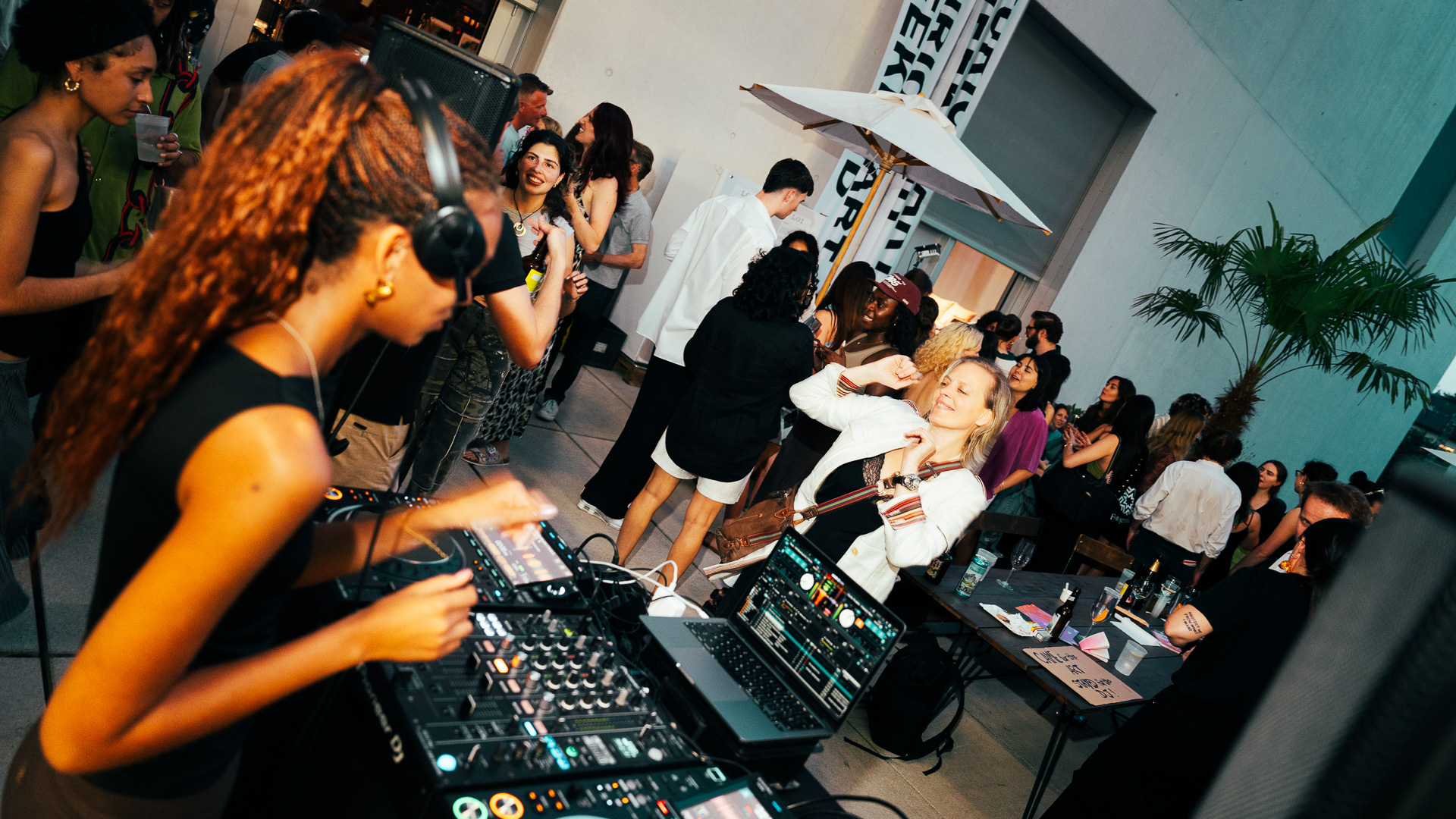
Some cultural marketing types might object that “Art Weekend” is an unappealing, unidentifiable, expressionless label. True enough — but it’s the word “Zurich” that makes all the difference. After all, if it took Cézanne’s whole life to paint like Cézanne (Merleau-Ponty, Cézanne’s Doubt, 1945), then it takes Zurich to produce a gallery weekend of this calibre, just as it takes Venice to produce a Biennale. Zurich can afford a weekend this dazzling because — worth remembering, given its population of “only” 440,000 — it has more contemporary galleries per capita than London or Paris. Because it has historical museums as remarkably evolved and present-tense as the Rietberg and the Kunsthaus (see our interview with its director, Ann Demeester). Because it draws collectors who are wealthy, yes, but above all passionate and knowledgeable — Maya Hoffmann, Ellen and Michael Ringier, Thomas Bechtler, the young Tobias van Gils and Nicola Erni (read our interview with her here). And because Zurich has a public administration far-sighted enough to understand that investing in culture means projecting the city outward, rather than handing politicians yet another electoral stage, as happened this year in Venice, where the mainstream press talked more about ministers, directors, and presidents than about the actual protagonists: the artists.
So, from container to content. In Zurich this year, we’re heading for Mickael Marman‘s solo show at Damien & The Love Guru, one of the very few emerging galleries to have kept its free, experimental spirit intact against the tyranny of the art fairs. At Gregor Staiger, Raphaela Vogel unveils a new body of work; at Oskar Weiss, Laura Langer‘s solo show comes with the launch of the catalogue Why Am I Me?, introduced by Kristian Vistrup Madsen. Meanwhile, the gallery’s drawing room hosts a new series of works on paper by Daniele Milvio, who this time turns his attention to Pythagoras’ theorem. Karma International presents Valie Export and Katerina Lysovenko — the latter fresh from the group show at Palazzo Contarini Polignac in Venice, curated by the PinchukArtCentre, and now opening her second solo with the gallery. And then the heavy hitters: Karen Kilimnik and Valentin Carron at Eva Presenhuber; Francis Alÿs at Peter Kilchmann, with a show devoted to his animations; Hana Miletić at Tschudi; Avery Singer, Henry Taylor, and James Jarvaise at Hauser & Wirth.
The trip is worth making regardless of Basel. There’s no curatorial theme, and no curator to soak up the attention of the mainstream press — or of the less expert, or simply lazier, audience, who’d rather not face the hard task of picking, out of hundreds of artists, the one worth connecting with (usually for no particular reason). Instead they take the shortcut: they learn the one name everyone keeps repeating, the one splashed across the headlines of the usual (general-interest) papers. And unconsciously, that name becomes the reference through which they see everything else. Behavioural psychology calls this anchoring. If five people die in a terrorist attack in a given city on a given day, we all rush to take the most absurd precautions — even though, almost certainly, more people died that same month in that same city from cancer, cardiovascular diseases or in car accidents. Given the choice between memorising a curator’s name or the names of the two hundred artists that curator put on show, our brains will always pick the curator — and, alongside it, the handful of artists we already knew, who will of course be declared brilliant, exceptional, essential. Meanwhile, as some of you will have noticed, we’ve drifted from Zurich to Venice — where this year the mother of all Biennales showed every one of its weaknesses, and not because of Russia, or the curator’s premature passing.
In some ways, the Biennale — and contemporary art more broadly — resembles Formula 1. Unlike most sports, where the rules have stayed roughly the same since their inception, part of the appeal of the world’s biggest motorsport competition is that its rulebook is constantly being rewritten. Whoever manages to get ahead generally does so by finding a loophole the engineers have spotted in the regulations — and into that narrow gap, that small fissure, they slip a minor innovation, just enough for an edge. Eventually the others catch up, the rules get updated, the gap closes — but by then someone else has found a new opening and run with it. As we all know, every comparison has its limits. But if the Biennale doesn’t want to slide to the back of the grid — or to lose ground to the private institutions that now call the shots in Venice — it might be worth opening a serious reflection, starting from two closely related points.
The first: if most of the Biennale’s budget really does come from private money — mostly galleries, collectors — wouldn’t it be more fair to give those interests a proper, ideally efficient, outlet? Worth remembering: from 1895 to 1973, the Biennale had a Sales Office (Ufficio Vendite), run for its last thirty years by Ettore Gian Ferrari, and shut down because the sensibility of the time saw the market as the enemy of creative freedom. One wonders what those protesters would say now, looking at how things turned out? Which leads to the second point. In a hyper-connected world where everyone has access to the same information, does it still make sense to rely on a curator with the same reverence we once reserved for Harald Szeemann at the turn of the century? We all see the same things now, follow the same Instagram accounts, draw on the same sources. What’s left of the curator’s role — a poetics? Or, more often, just someone who can guarantee the orderly flow of money needed to keep the machine running? And what happens when, as we clearly saw this year, private individuals decide to put their resources into their own institutions instead — outside the Giardini, outside the impossible Arsenale?
July 2, 2026

